If your grass looks yellow, thin, or unhealthy, the instinct is usually to water it more. But in a lot of Florida yards, the opposite is true the lawn is already getting more water than it needs. Recognizing the signs you are overwatering your lawn can save you from ongoing turf damage, wasted water, and a sprinkler system that’s running far more than it should.
The tricky part is that overwatered grass and underwatered grass can look surprisingly similar at first glance. Figuring out which one you’re dealing with is the difference between fixing the real problem and making it worse.
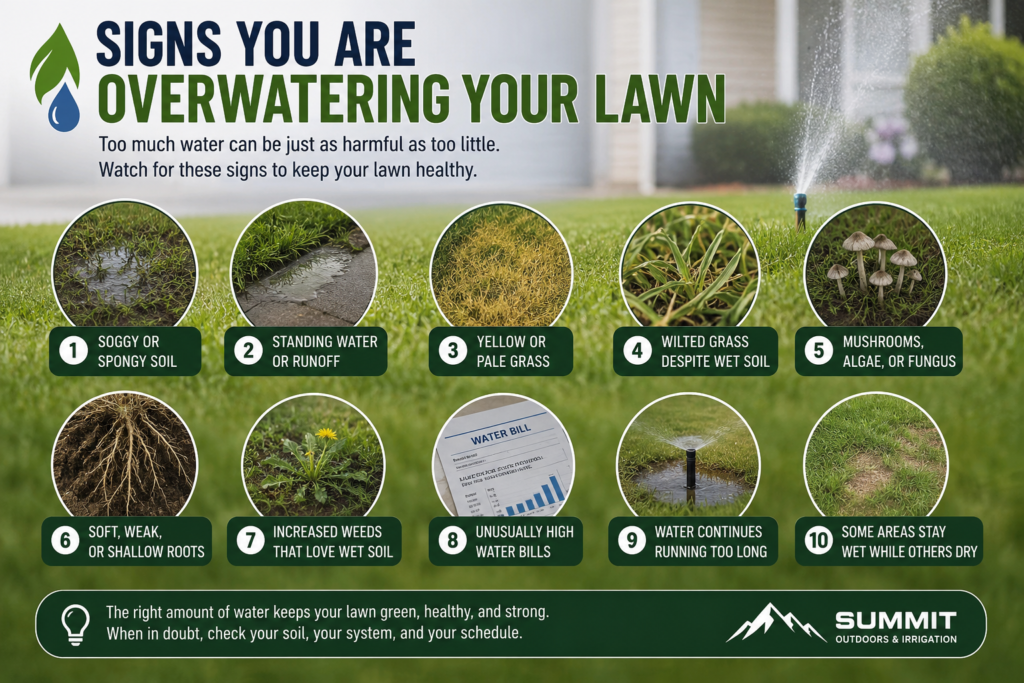
You’re likely overwatering your lawn if the soil feels soggy between waterings, water pools or runs off after irrigation, grass looks pale or wilted even when the ground is wet, or you’re noticing mushrooms, soft spots, or thinning patches. Uneven wetness some areas soaked while others stay dry often points to a sprinkler coverage or scheduling problem rather than the weather.
What Happens When a Lawn Gets Too Much Water?
Grass roots need air as much as they need water. When soil stays saturated for long stretches, the pockets of air between soil particles fill with water instead, and roots can’t get the oxygen they need to function normally. Over time, this pushes roots to stay shallow near the surface instead of growing deep, which actually makes the lawn less able to handle dry spells later on.
Excess water also carries nutrients like nitrogen down past the root zone before the grass can use them, a process called leaching. That means the fertilizer you’re paying for may be draining away instead of feeding your lawn. According to University of Florida IFAS Extension research on turfgrass irrigation, nutrient loss from overwatering diminishes turf health and increases its vulnerability to diseases and pests, and can also contribute to nutrient runoff into nearby waterways.
Consistently wet conditions are also exactly what many turf diseases need to take hold. Several fungal and water-mold pathogens that affect Florida lawns are directly associated with wet soil, whether from heavy rainfall or excess irrigation. On top of the plant health issues, a lawn that’s getting more water than it needs usually means a sprinkler system running longer or more often than necessary which shows up as a higher water bill and, over time, added wear on valves, heads, and pipes.
Signs You Are Overwatering Your Lawn
None of these signs are proof on their own several can also be caused by disease, drainage issues, or something other than watering. But taken together, they’re a good starting point for figuring out what’s really going on.
1. Soil That Stays Soggy or Spongy
If the ground feels wet or spongy underfoot a day or more after your last watering cycle, that’s often a sign the lawn is holding more water than it can use. Florida’s sandy soils typically drain fast, so soil that stays consistently damp usually means water is being applied faster than it can soak in or use up.
Push a screwdriver or soil probe into the ground after watering if it slides in easily to 6–8 inches with no resistance and the soil feels waterlogged rather than just moist, that’s worth paying attention to. Keep in mind that heavy clay pockets, poor drainage, or a recent storm can produce the same soggy feel even with a properly programmed system.
2. Standing Water or Runoff After Irrigation
Puddles that form on the lawn, or water running off onto a driveway, sidewalk, or street, are one of the clearer signs of an irrigation system applying water faster than the soil can absorb it. This is especially common on sloped yards or areas with compacted soil.
Watch a zone run from start to finish and note when and where runoff begins. If it happens early in the cycle, the system may be applying water too quickly for that area, which is something a technician can often correct by adjusting run times or switching to lower-precipitation nozzles.
3. Yellowing or Pale Grass
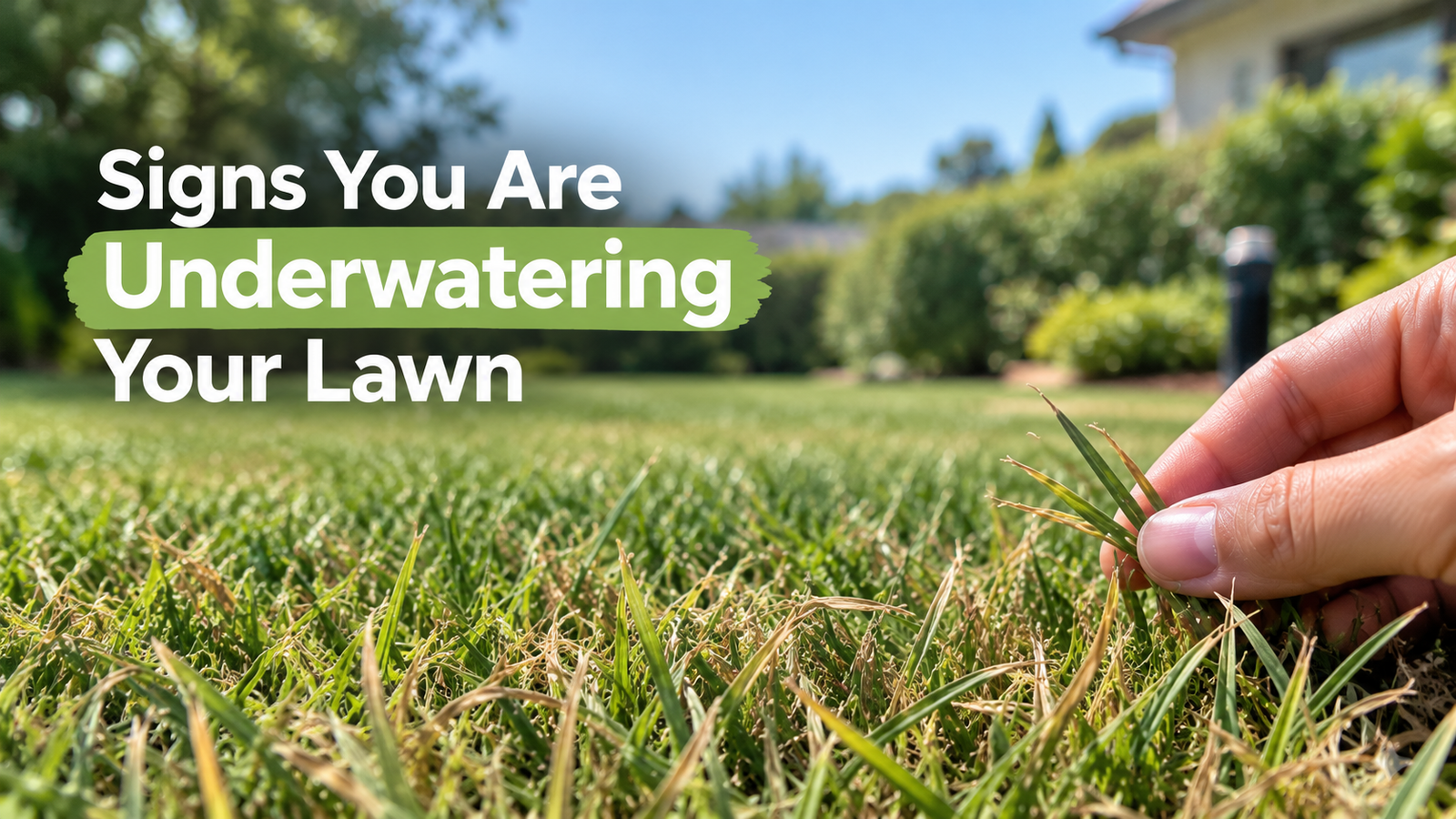
Yellow or pale grass is often read as a sign of thirst, but it can also mean roots are suffocating in saturated soil and can’t take up nutrients properly. The color change is the plant’s response to stress it doesn’t tell you on its own whether the stress is too much water or too little.
Check the soil moisture before assuming the grass needs water. If the ground is already damp and the grass is yellowing, added water is unlikely to help and may make things worse. Nutrient deficiencies and certain lawn diseases can produce similar yellowing, so this sign works best combined with a soil check.
4. Grass That Looks Wilted Despite Wet Soil
Wilted, droopy grass is a classic drought symptom folded leaf blades are one of the visual cues Extension guidance uses to signal the turf actually needs water. But when the soil underneath is clearly wet and the grass still looks stressed, the more likely explanation is that saturated soil is damaging the roots’ ability to take up water, not that the plant is thirsty.
This is one of the more counterintuitive signs of overwatering, because the visual cue looks identical to underwatering. The soil check is what separates the two if the ground is wet and the grass is still wilting, more water is not the fix.
5. Mushrooms, Algae, or Increased Fungal Activity
Mushrooms popping up in the lawn, slimy algae on the soil surface, or circular patches with a different texture or color than the surrounding grass can all show up when conditions stay consistently damp. Several turfgrass diseases common in Florida including large patch and pythium root rot are linked to wet, poorly draining soil. Pythium root rot symptoms are always associated with wet soil conditions, whether from excessive rainfall or irrigation, and poor drainage makes the problem worse.
Mushrooms alone aren’t definite proof of overwatering they’re a normal part of many Florida lawns and can appear after ordinary rainfall too. But if you’re also seeing soggy soil or standing water in the same area, it’s a reasonable sign to look at your watering schedule.
6. Soft, Weak, or Shallow Grass Roots
If you can easily pull up patches of grass with minimal resistance, or the lawn feels spongy and unstable when you walk on it, shallow rooting may be part of the problem. Frequent, light watering encourages roots to develop close to the surface instead of growing deeper into the soil, which leaves the turf more vulnerable during dry periods.
Dig up a small section of turf and look at the root depth. Roots that stop just an inch or two down, rather than extending several inches, often point toward a watering pattern that’s too frequent even if the total amount of water isn’t excessive.
7. Increased Weeds That Favor Wet Conditions
Certain weeds thrive specifically in damp lawns. UF/IFAS Extension notes that overwatering promotes the growth of weed species such as dollarweed and sedges both of which are common in Florida lawns with excess moisture. If you’re seeing more of these particular weeds than usual, it can be a clue about soil moisture, separate from general weed pressure from mowing height or fertilization timing.
Compare where the weeds are concentrated to where the soil stays wettest. If they line up, moisture is likely part of the equation.
8. Unusually High Water Bills
A jump in your water bill without a clear reason no new landscaping, no unusual weather is worth investigating. It can mean the irrigation system is running longer, more often, or more frequently than intended, especially if a controller schedule hasn’t been adjusted in a while.
Compare recent bills to the same months in previous years, and check your controller’s actual run times and days against what you think it’s set to. A stuck valve or a controller that’s drifted from its intended program can quietly drive up usage for weeks before anyone notices.
9. Water Continuing to Run Long After the Lawn Is Saturated
If a zone is still running well after the soil has clearly reached its capacity water pooling, runoff starting, or the ground already saturated from an earlier cycle that run time is likely longer than the lawn needs. This is different from a single watering event; it’s about the cycle continuing past the point where it’s doing any good.
Time how long it takes before runoff or pooling starts, and compare that to your programmed run time. If the cycle is set well beyond that point, shortening it or splitting it into shorter cycles with breaks in between is one of the practical fixes recommended by EPA WaterSense for slopes and slow-draining soil.
10. Some Lawn Areas Staying Wet While Others Remain Dry
Uneven watering soggy in one spot, bone-dry a few feet away is one of the more reliable signs that the issue is mechanical rather than seasonal. It usually points to something specific: overlapping spray patterns, a clogged or misaligned head, mismatched nozzle types on the same zone, or multiple lawn areas with different water needs sharing one zone.
Walk the yard shortly after a watering cycle and note the wet and dry boundaries. If the pattern repeats in the same spots every time, that’s a sprinkler coverage issue rather than a rainfall or drought issue.
Overwatered Lawn vs. Underwatered Lawn
Because several symptoms overlap, side-by-side comparison can help but visual signs alone don’t always give a certain answer. A soil check is often the deciding factor.
| Symptom | Possible Overwatering Sign | Possible Underwatering Sign |
|---|---|---|
| Soil moisture | Soggy, spongy, or saturated | Dry, hard, or crumbly |
| Grass color | Pale green or yellow, sometimes with fungal patches | Blue-gray tint, dull color |
| Leaf texture | Soft, sometimes wilted despite wet soil | Folded or rolled leaf blades |
| Footprints | May remain visible due to weakened, matted grass | Remain visible and slow to spring back |
| Root condition | Shallow, soft, sometimes rotting | Deep but stressed, may appear dry and brittle |
| Recovery after watering | Little to no improvement; may worsen | Noticeable improvement within a day |
| Runoff or standing water | Present, especially on slopes or compacted soil | Typically absent |
If you’re seeing a mix of signs from both columns, that’s often a sign of an inconsistent watering pattern parts of the lawn getting too much, other parts too little rather than a simple “add water” or “reduce water” fix.
Why Lawn Overwatering Happens
Overwatering is rarely about homeowners intentionally running the system too much. It’s usually the result of a schedule or setup that hasn’t kept pace with the lawn’s actual needs. Common contributors include:
- Timers running longer than necessary for the current season or grass type
- Too many watering days programmed into the controller
- Irrigation continuing to run after rainfall, without a rain sensor or manual override
- Broken, tilted, or misaligned sprinkler heads applying water where it isn’t needed
- Leaking valves that let water seep out even when the system is off
- Overlapping zone coverage, where two zones water the same area
- Controller programming errors, including incorrect start times or duplicate schedules
- Poor drainage that keeps water sitting on the surface longer than it should
- Different lawn areas on the same zone, such as full sun and shaded turf sharing one schedule
- Seasonal settings that are never adjusted, so a summer schedule keeps running into cooler, wetter months
- Watering based on how the lawn looks, rather than checking actual soil moisture
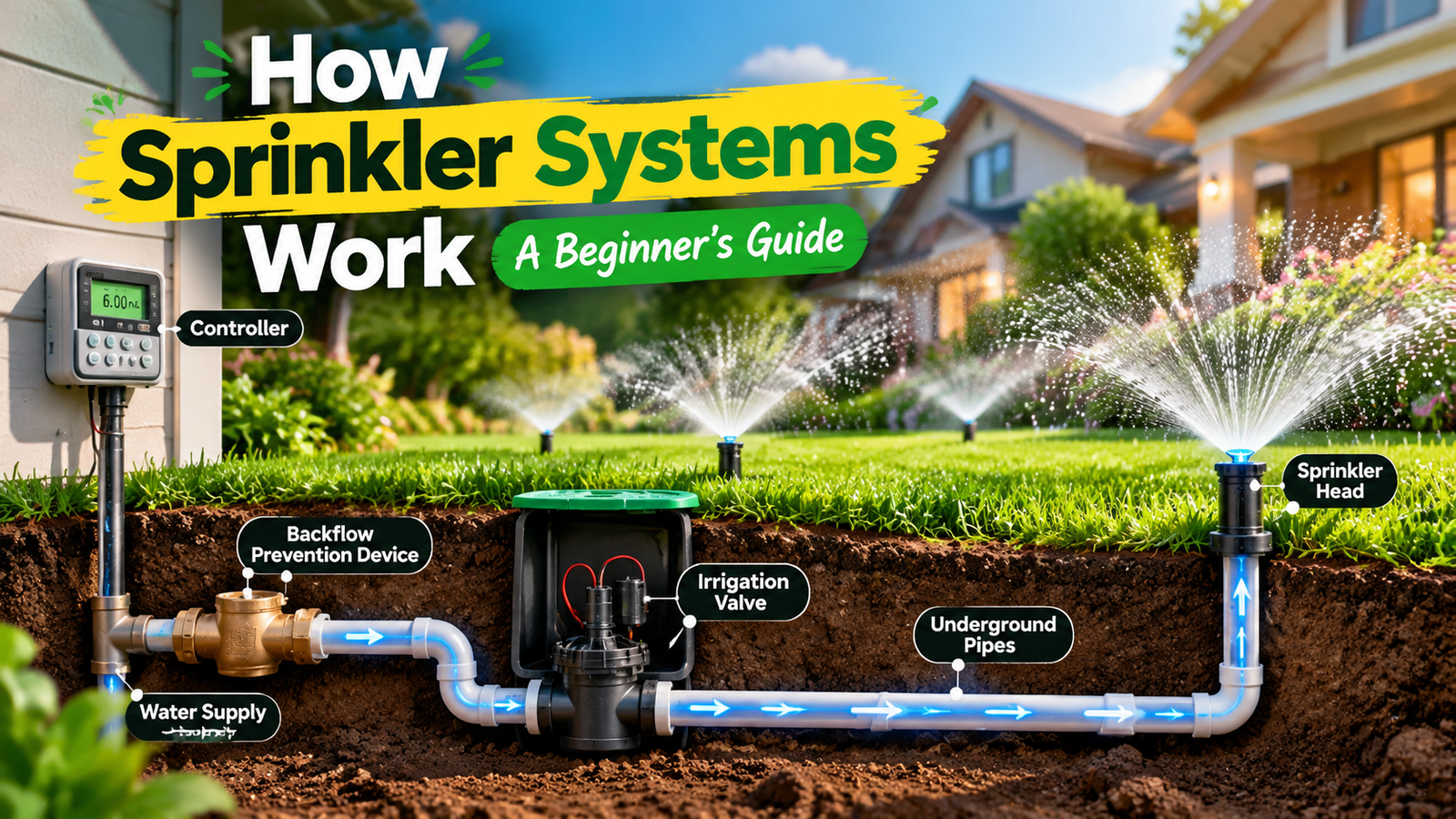
Several of these leaking valves, broken heads, overlapping coverage, and controller errors are irrigation-system issues rather than watering-habit issues, which is where sprinkler system repair services come into play.
How Florida Weather Can Affect Lawn Watering
Northwest Florida’s climate makes irrigation scheduling more complicated than a simple fixed calendar. Rainfall in Okaloosa County and the surrounding Panhandle can vary significantly month to month, and a schedule that made sense during a dry stretch can quickly become excessive once seasonal rain patterns shift. UF/IFAS Extension notes that Florida receives 50 or more inches of annual rainfall in most areas, and when rainfall is adequate to meet the lawn’s needs, supplemental irrigation should be turned off.
Humidity plays a role too. Warm, humid conditions slow evaporation and create a favorable environment for the fungal issues discussed earlier, which means a lawn can hold moisture longer than expected even without additional watering. Summer heat increases the temptation to water more, but it doesn’t necessarily mean more frequent irrigation is the right call root depth and soil type matter more than air temperature alone.
Soil type is another variable. Many yards in this part of Florida have sandy or mixed soil that drains quickly, but pockets of denser or compacted soil nearby can hold water much longer, which is part of why the same watering schedule can overwater one section of a lawn while barely reaching another. Shade changes water needs as well a shaded section of lawn typically dries out slower than an area in full sun, so a single zone covering both is a common source of uneven watering.
Recent storms are worth factoring in too. A system that isn’t paused after a heavy rain event, whether by rain sensor or manual adjustment, will often apply water the lawn doesn’t need. And because watering rules can vary by local water management district and may change over time, it’s worth checking current restrictions with your local water management district or municipality rather than assuming a schedule from a previous year still applies.
How to Check Whether Your Lawn Is Being Overwatered
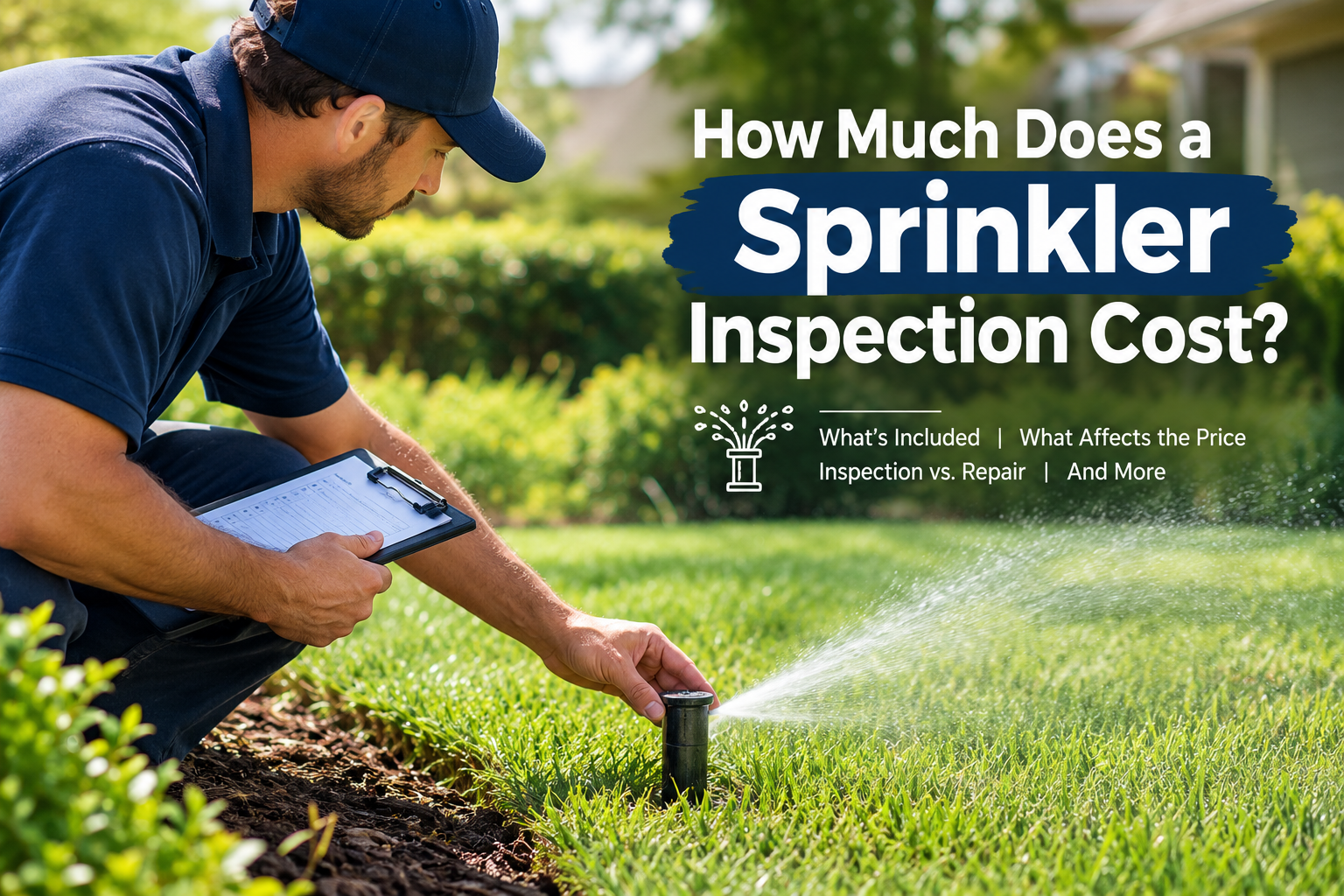
A basic inspection can tell you a lot before you call anyone. EPA WaterSense suggests a simple footprint test as one starting point if grass springs back after you walk on it, it likely doesn’t need water yet. Here’s a more complete practical process:
- Check the soil before the next scheduled watering. If it’s still damp or spongy well before the next cycle, the schedule may be too frequent.
- Observe how long water sits on the surface after a cycle ends. Water that lingers for an extended period may indicate poor drainage or excessive application.
- Run each zone separately and watch the full cycle from start to finish, rather than judging the system by a quick glance.
- Look for broken, tilted, blocked, or leaking heads while each zone runs.
- Check for overlapping spray patterns, where two heads are watering the same section of lawn.
- Review the controller’s schedule and seasonal settings to confirm they match the current time of year.
- Check whether the system runs on schedule even after a recent rainfall, which may point to a missing or malfunctioning rain sensor.
- Compare consistently wet areas to consistently dry areas of the lawn to identify coverage problems.
- Look for water running onto sidewalks, driveways, or roads, which usually means a zone is running longer than the lawn can absorb.
If any of this points to a wiring issue, a valve that won’t close, an underground leak, or unusual pressure behavior, that’s a point to stop and bring in a professional rather than attempting to open up electrical components or pressurized lines yourself.
How to Fix an Overwatered Lawn
Once you’ve identified overwatering as a likely factor, recovery depends on addressing the actual cause rather than just cutting back watering across the board.
Start by reducing unnecessary irrigation cycles and giving the soil time to drain and dry out somewhat before resuming a normal schedule. Avoid heavy foot traffic on saturated turf in the meantime, since compacted, waterlogged soil is more prone to damage and slower to recover.
At the same time, correct any coverage problems you found during inspection misaligned heads, overlapping zones, or mismatched nozzle types all contribute to uneven watering even after you dial back the schedule. Adjust the controller to reflect the current season and grass type rather than a static year-round setting, and address any leaks or faulty valves, since a leaking valve can keep a zone overwatered even when the controller isn’t actively running.
If drainage is part of the problem water pooling in low spots regardless of the sprinkler schedule that may require a separate conversation about grading or soil amendment rather than an irrigation fix alone. It’s also worth resisting the urge to stop watering completely for an extended period. The right approach depends on your grass type, current soil condition, and the weather ahead; cutting off water entirely, especially during a hot, dry stretch, can create a new set of problems. Monitor the lawn over the following weeks and adjust gradually rather than making one large change and walking away.
When the Problem May Be Your Sprinkler System
Some overwatering signs point specifically toward the irrigation system rather than the schedule itself. Watch for:
- A zone that stays wet well after the system has stopped running
- A sprinkler head that continues leaking or dripping between cycles
- Water bubbling up from the ground, which can indicate an underground line issue
- One zone with noticeably lower pressure than the others
- A controller that activates unexpectedly or outside its programmed schedule
- Water spraying onto pavement instead of the lawn
- Some areas flooding while others stay dry during the same cycle
- The system running shortly after rainfall
- Water usage climbing without an obvious explanation
Accurate diagnosis matters here, because the fix is different depending on whether the root cause is a scheduling issue, a coverage problem, a failing valve, an underground leak, a controller malfunction, or a pipe issue. Guessing at a fix without pinpointing the actual cause often means the same problem returns a few weeks later.
When to Call an Irrigation Repair Professional
Some overwatering situations are simple enough to correct with a schedule adjustment. Others point to something happening below the surface or inside the controller that isn’t safe or practical to diagnose on your own. It’s worth bringing in a professional when:
- You can’t pinpoint what’s causing the overwatering after checking the basics
- The lawn stays saturated even after you’ve adjusted the schedule
- You suspect an underground leak
- A valve won’t fully close
- Water pressure is inconsistent across zones
- Multiple zones seem to be affected at once
- The controller is behaving unpredictably
- The problem keeps coming back after you’ve made adjustments
- Water is clearly being wasted or causing damage to the surrounding property
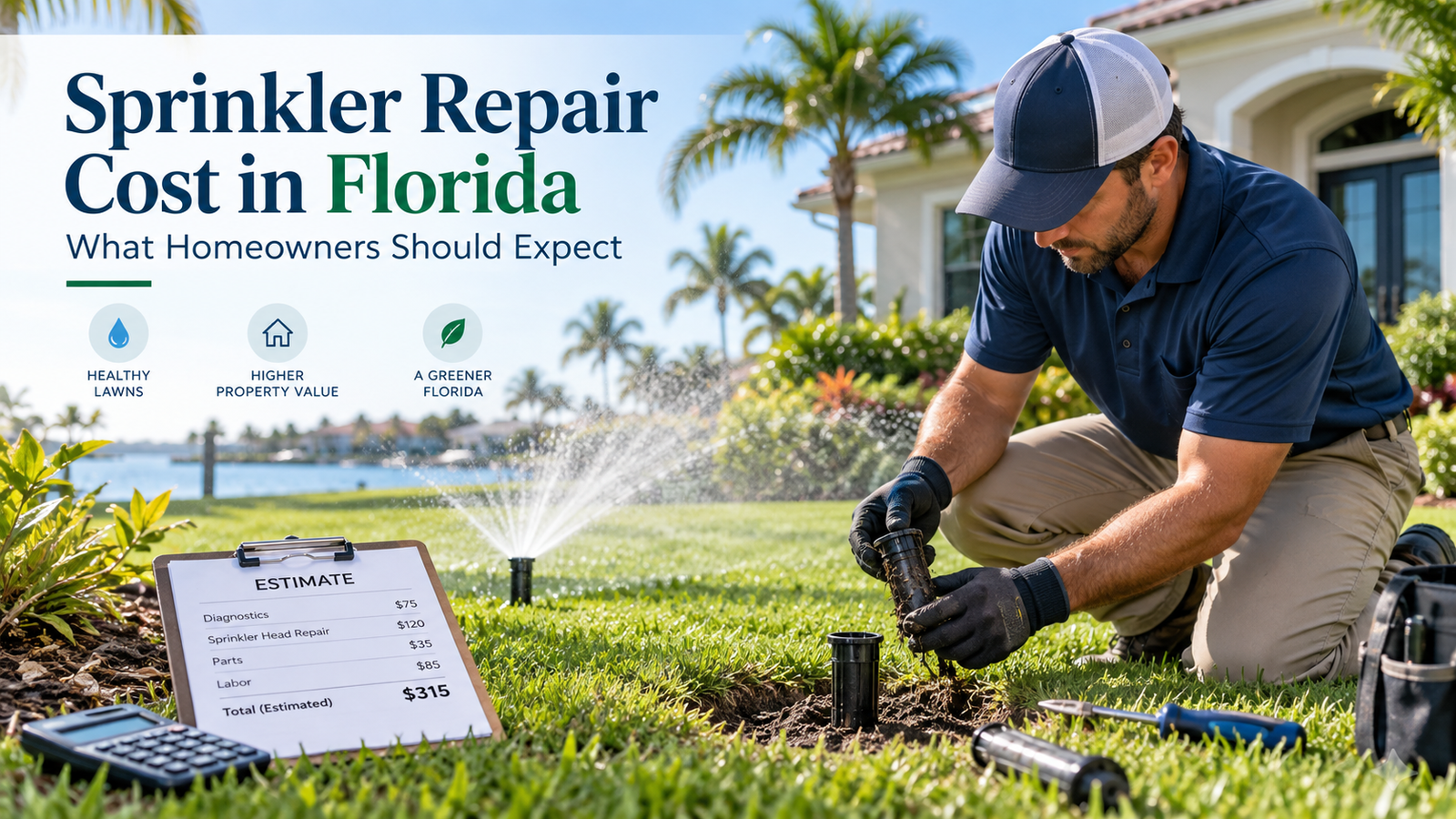
This is where Summit Outdoors & Irrigation comes in. We’re a repair-focused irrigation company serving Okaloosa County, including Fort Walton Beach, Niceville, Destin, and Shalimar. Our approach is to diagnose the actual cause of a problem whether that’s a valve, a leak, a controller, or a coverage issue and repair the existing system rather than pushing an unnecessary replacement. If your irrigation pump is part of the issue, we also handle irrigation pump diagnosis and replacement when that’s genuinely the right solution.
How to Prevent Lawn Overwatering
A short checklist can help keep a properly repaired system from drifting back into overwatering:
- Check soil conditions before watering rather than watering on a fixed calendar alone
- Adjust the schedule for rainfall and seasonal changes throughout the year
- Inspect sprinkler heads periodically for damage, blockages, or misalignment
- Correct overspray and overlapping coverage between zones
- Repair leaks promptly rather than letting them run
- Review timer and controller settings each season
- Use rain sensors or similar controls where appropriate for your system
- Have the system inspected if coverage becomes uneven or inconsistent over time
Frequently Asked Questions
What does an overwatered lawn look like? An overwatered lawn often has soggy or spongy soil, pale or yellowing grass, and sometimes mushrooms or fungal patches. Grass may look wilted even though the ground underneath is wet. Because several of these signs can also come from disease or drainage problems, checking soil moisture directly gives a clearer picture than appearance alone.
Can overwatered grass turn brown? Yes. While yellowing is more common early on, prolonged overwatering can lead to root damage, fungal disease, or thinning that eventually shows up as brown patches. Brown grass isn’t unique to overwatering, though drought stress, pests, and certain diseases produce similar results, so it’s worth checking soil moisture before assuming the cause.
How long does an overwatered lawn take to recover? There’s no single timeline. Recovery depends on how long the soil stayed saturated, the grass type, current weather, and whether the underlying cause schedule, coverage, or a system issue has been corrected. Some lawns bounce back within a few weeks once watering is adjusted; others take longer if root or disease damage occurred.
Should I stop watering an overwatered lawn? Not entirely, and not for an extended period. Reducing unnecessary irrigation while the soil drains makes sense, but stopping altogether can create a new problem, especially in hot or dry weather. Adjusting the schedule based on soil condition and grass needs is generally a better approach than cutting off water completely.
Can too much water cause fungus in grass? Yes. Many turfgrass diseases common in Florida are associated with consistently wet soil conditions, whether from rainfall or irrigation. That said, fungal issues can also appear after normal rain events, so overwatering is one possible contributing factor rather than the only explanation.
Why does my lawn stay wet after the sprinklers stop? This can mean the soil is naturally slow-draining, but it can also point to a leaking valve, a stuck sprinkler head, or a zone that’s programmed to run longer than the lawn can absorb. If it happens consistently in the same area, it’s worth having the zone checked.
Can a leaking sprinkler valve overwater one lawn zone? Yes. A valve that doesn’t fully close can allow water to seep into a zone even when the controller isn’t actively running that cycle, which often shows up as one persistently soggy area while the rest of the lawn looks normal.
How can I tell whether my sprinkler timer is running too long? Time how long it takes for pooling or runoff to start during a cycle, then compare that to your programmed run time. If the controller is set well beyond that point, the run time is likely longer than the lawn needs for that zone.
When should I call a sprinkler repair professional? Call a professional when you can’t identify the cause of overwatering, suspect a leak or valve issue, notice inconsistent pressure, or find that the problem keeps returning after you’ve adjusted the schedule. Issues involving wiring, underground lines, or pumps are best left to a professional rather than DIY troubleshooting.
Does Florida rain mean I should change my irrigation schedule? Often, yes. Because rainfall in Florida varies by season and by storm, a fixed year-round schedule can easily lead to overwatering during wetter months. Adjusting the schedule seasonally, or using a rain sensor, helps keep irrigation in line with what the lawn is actually receiving from rainfall.
If your lawn stays saturated no matter how you adjust the schedule, watering seems uneven across the yard, or you suspect a leak, faulty valve, or controller issue, it may be time to have the system looked at rather than guessing. Summit Outdoors & Irrigation inspects existing sprinkler systems throughout Okaloosa County and provides an honest recommendation based on what’s actually causing the problem not an unnecessary replacement. Contact Summit Outdoors & Irrigation to have your system checked.