
- Key Highlights
- Here are the key takeaways from this guide on lawn care:
- Dry spots on your lawn are often caused by inadequate watering, soil compaction, or hot weather.
- Identifying the root cause, whether it’s poor watering techniques or pests, is the first step to fixing the dry patch.
- Aerating the soil and applying a wetting agent can significantly improve water absorption.
- It’s important to distinguish between dry spots, which are caused by lack of water, and brown patches, which can be due to fungus or pests.
- Proper lawn care, including deep watering and correct mowing height, helps prevent dry spots from returning.
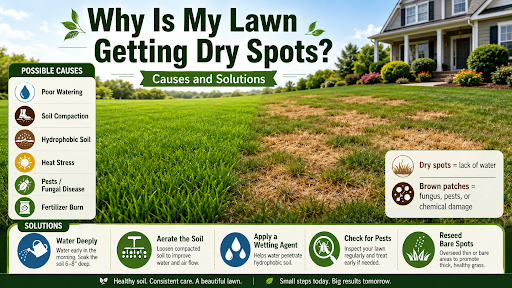
There’s nothing quite like a lush, green lawn, but what happens when you start seeing unsightly dry spots? It can be frustrating to watch patches of your beautiful turf turn into dry grass. These dry areas can appear for many reasons, from simple watering issues to more complex soil problems. This guide will help you understand the common causes of these dry spots and provide practical lawn care solutions to restore your yard to its vibrant, healthy state. Let’s get your lawn back to its best.
What Are Dry Spots on a Lawn?
Dry spots are areas where the grass has become dehydrated, often appearing faded, bluish-grey, or brown. These patches of dry grass indicate that the grass roots are not receiving enough moisture to stay healthy. This lack of water absorption can make the dry soil underneath become hard and compacted.
The most common reasons for dry spots appearing on your lawn are often environmental. Extreme heat, insufficient watering, and soil that repels water are leading culprits. When these factors combine, they create the perfect conditions for dry spots to form, preventing your lawn from getting the water it needs to thrive.
Dry Spots vs Brown Patches
While the terms are often used interchangeably, there is a key difference between dry spots and brown patches. Dry spots are primarily caused by a lack of water reaching the grass roots, leading to dehydrated, dead grass. The grass feels dry and brittle to the touch.
On the other hand, brown spots or a brown patch can result from a variety of issues, including fungal diseases, pest infestations, or even dog urine. These dead spots might feel spongy if grubs are present or have a distinct circular pattern if caused by a fungus.
Understanding the cause helps determine the right solution. Here’s a quick comparison to help you identify the issue in your lawn:
Feature
Dry Spots (Lack of Water)
Brown Patches (Fungus/Pests)
Cause
Insufficient water, soil compaction, heat stress.
Fungal disease (e.g., Brown Patch, Dollar Spot), pests (e.g., grubs), dog urine.
Appearance
Grass looks faded, bluish-grey, then brown. The area feels dry and hard.
Irregular or circular patches, sometimes with a dark green ring (urine) or white mycelium (fungus).
Texture
Soil is often hard and compacted. Grass is brittle.
Lawn may feel spongy underfoot if grubs are present.
How to Identify a Dry Patch Early
Identifying a dry patch early can save your lawn from further damage. The first sign is often a change in color. The grass blades in the affected area will lose their vibrant green and turn a stressed, bluish-grey color before eventually becoming brown and brittle.
Another clear indicator is the condition of the soil. If you poke a screwdriver or garden fork into the dry patch and it feels rock-hard and difficult to penetrate, it’s a strong sign that the soil is compacted and not absorbing water. These dry areas will feel different from the rest of your healthy lawn. If you suspect poor watering habits are the cause, these signs will be your biggest clues.
Common Signs of a Dry Patch Caused by Poor Watering
Here are some common signs of a dry patch caused by poor watering:
The grass blades appear wilted or curled.
The soil in the affected area is hard and dry to the touch.
Your footprints remain visible on the lawn long after you’ve walked on it.
The dry grass is concentrated in areas that receive full sun or are missed by sprinklers.
Common Causes of Dry Spots on Lawn
When you see a dry patch on your lawn, several root causes could be at play. During hot dry spells, your lawn is under significant stress. This, combined with issues like soil compaction from heavy foot traffic, can quickly lead to dry spots. The soil becomes so dense that water cannot penetrate it, starving the roots.
Another major issue is hydrophobic soil, a condition where the soil actively repels water. A waxy residue, sometimes from fungal activity or decaying organic matter, creates a barrier that prevents moisture from soaking in. This means that even if you are watering, the water isn’t reaching where it’s needed most. Now, let’s explore some of these causes in more detail.
Poor Watering and Sprinkler Coverage
One of the most frequent reasons for dry grass is simply not getting enough water. If your watering techniques are inconsistent or your sprinkler system provides uneven coverage, some parts of your lawn may be left thirsty. Light, frequent watering can also be a problem, as it encourages shallow roots that are more susceptible to drying out.
To promote better water absorption and a healthier lawn, you should practice deep watering. This means watering less often but for longer periods, allowing the moisture to soak deep into the soil. This encourages the grass to develop deep roots, making it more resilient during dry periods.
Watering Techniques to Prevent Dry Spots
Here are some specific watering techniques to prevent dry spots:
Water early in the morning to reduce evaporation.
Avoid watering in the late evening, as prolonged moisture can lead to fungal diseases.
Use a rain gauge to measure how much water your lawn is receiving.
Adjust your sprinkler system to ensure all areas of your lawn get even coverage.
Soil Compaction and Water Absorption Problems
Soil compaction is a common but often overlooked cause of dry areas. When soil particles are pressed together tightly from heavy foot traffic, kids playing, or even mowing, the space between them is reduced. This makes it extremely difficult for water, air, and nutrients to reach the grass roots.
You can often tell if soil compaction is the issue if water tends to pool on the surface after rain or watering instead of soaking in. Another simple test is to try pushing a garden fork or screwdriver into the ground. If you meet a lot of resistance in the dry area compared to healthier parts of the lawn, compaction is likely the culprit.
To fix this, you need to aerate the soil. Using tools like a garden fork or aerator sandals creates small holes in the ground, breaking up the compacted soil. This simple action dramatically improves water penetration and allows the roots to breathe and grow, reviving the dry patches in your grass.
Other Lawn Problems That Look Like Dry Spots
While water and soil issues are primary culprits, other factors can also create patches of dry grass. It’s important to consider these possibilities if you’ve already addressed watering and compaction problems. Issues like pest damage, fungal diseases, or even fertilizer burn can mimic the appearance of dry areas caused by a lack of moisture.
Correctly identifying these other causes is crucial because the solutions are very different. Applying more water to a patch caused by a fungus, for instance, could make the problem worse. We will look closer at how to spot the signs of lawn pests and chemical damage.
Lawn Pests and Fungal Diseases
Yes, lawn pests and fungal diseases can certainly cause dry-looking patches. Pests like chafer grubs live in the soil and feed on grass roots, cutting off the plant’s ability to absorb water and nutrients. This pest damage often makes the lawn feel spongy underfoot, and you might even be able to roll back the turf like a carpet.
Fungal diseases also create distinct patterns. For example, dollar spot appears as small, bleached circles, while Brown Patch causes larger, irregular shapes. You might notice a fine, web-like substance on the grass in the early morning dew if a fungus is present. These issues are common in hot, humid weather, especially if the grass stays wet overnight.
Signs of Pest or Disease Damage
Here are some signs of pest or disease damage:
The lawn feels spongy when you walk on it.
Increased bird activity as they feed on grubs.
Small, coin-sized bleached spots (Dollar Spot).
Irregularly shaped brown patches.
You can easily pull up the grass, and it has no roots.
Fertilizer Burn and Chemical Damage
Using too much fertilizer or applying it unevenly can lead to fertilizer burn. This chemical damage happens because the high concentration of nitrogen and salts in the fertilizer draws moisture out of the grass blades, causing them to turn yellow or brown and die. The result looks very similar to a dry patch caused by drought.
This is why it’s so important to follow the application instructions on any lawn care product. An accidental spill or a malfunctioning spreader can create concentrated spots of dead grass. Unlike a true dry spot, a patch caused by fertilizer burn won’t improve with watering alone and may need to be repaired.
If you suspect fertilizer burn, you will see a rapid browning or yellowing of the grass shortly after application. The damage will be most severe where the fertilizer was most concentrated. While it looks like a brown patch, the cause is chemical, not a lack of water retention in the soil itself.
How to Repair Dead Grass Patches
Once you’ve figured out why you have a dry patch, it’s time for action. Repairing dead grass patches doesn’t have to be complicated. The key is to address the underlying cause while helping the soil recover. The quickest repair solutions often involve improving water absorption with a wetting agent and then encouraging new growth.
Different problems require different lawn care products and techniques. Whether it’s adjusting your watering schedule, aerating compacted soil, or reseeding bare spots, a targeted approach will bring your lawn back to life. Let’s examine the specific steps you can take to fix these problem areas for good.
Steps to Repair a Dry Patch
To repair dead grass patches, start by improving the soil. First, aerate the affected area to loosen compacted soil and improve water movement. After aerating, apply a wetting agent. This product helps break down the water-repellent barrier on dry soil, allowing moisture to penetrate deep into the root zone.
Next, you can encourage the surrounding grass to fill in the spot. Applying a balanced fertilizer will stimulate new growth. For larger bare patches, you may need to take reseeding steps. Rake away the dead grass, loosen the top layer of soil, and spread a thin layer of compost or fresh topsoil. Then, apply grass seed appropriate for your lawn type and water it gently.
Here are the key steps to repair a dry patch:
Aerate the hard, dry soil with a garden fork.
Apply a wetting agent and water the area thoroughly.
Add a thin layer of organic matter like compost.
Reseed the bare patch and keep it consistently moist until the new grass is established.
Conclusion
In summary, understanding the causes of dry spots on your lawn is essential to maintain its health and appearance. From inadequate watering to soil compaction and even lawn pests, various factors can contribute to these unsightly patches. Implementing effective solutions, such as proper watering techniques and soil treatments, can help revive those areas and prevent future occurrences. By taking care of your lawn and being proactive about its needs, you can enjoy a lush, vibrant yard all season long. For personalized tips and advice on lawn care, don’t hesitate to reach out for a consultation!
Frequently Asked Questions
How can I tell if dry spots are caused by poor watering?
Check the soil in the dry patch. If it’s hard and dry, poor watering is a likely cause. Observe the dry spots to see if they are in areas your sprinklers might miss. If the grass feels spongy or has unusual patterns, you might be dealing with pests or disease instead.
What is the quickest way to fix dry spots on my lawn?
For a quick fix, aerate the dry patch, apply a wetting agent, and water deeply. This improves water retention. For bare spots, follow these lawn care steps with reseeding. Rake the area, add new soil, apply seed, and keep it moist until the new grass grows in.
Can better watering techniques prevent dry spots?
Absolutely. Adopting better watering techniques is one of the most effective ways to prevent dry spots. Watering deeply and less frequently encourages strong roots and improves water absorption throughout the soil profile, leading to a healthier, more resilient green lawn that is less prone to drying out.