Irrigation pump replacement may be necessary when your sprinkler system suddenly loses water pressure, the pump repeatedly loses prime, or the motor refuses to start. These problems can leave your lawn dry, create uneven watering, and increase maintenance costs. However, not every irrigation pump problem requires a complete replacement. Understanding the warning signs can help you determine whether your system needs a minor repair or a new pump.
For homeowners in Northwest Florida, a reliable irrigation pump is essential for maintaining a healthy lawn throughout the long growing season. Heat, frequent watering, sand in the water supply, and coastal conditions can contribute to pump wear over time.
This guide explains seven common signs of irrigation pump failure, safe troubleshooting steps, the difference between pump repair and replacement, maintenance tips, and what to expect from professional service in Okaloosa County.
What Is an Irrigation Pump and Why Does It Matter?
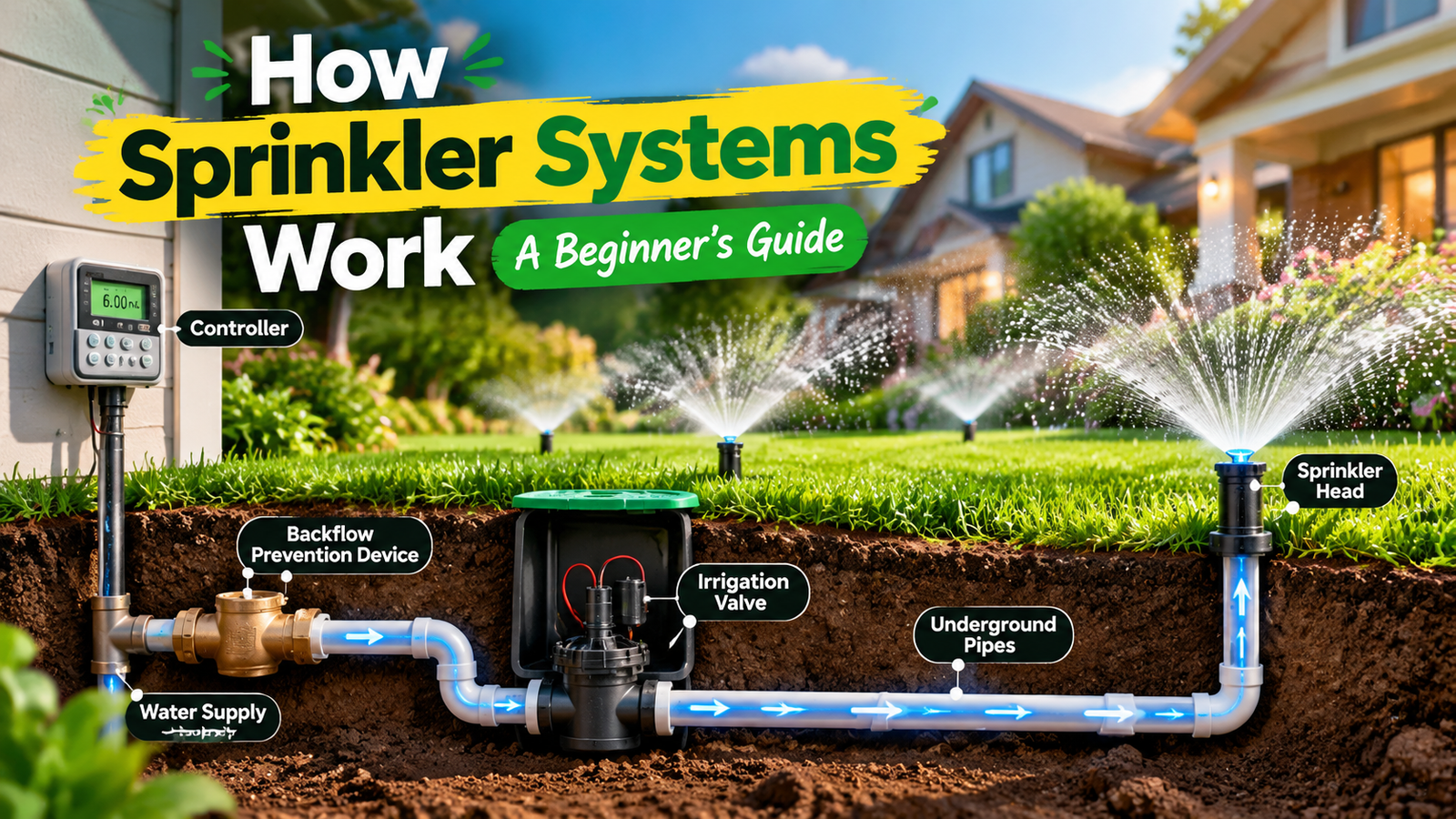
An irrigation pump moves water from a source, such as a well, pond, or storage tank, into your sprinkler system. Depending on the installation, it may also help draw water from the source and provide the pressure needed to distribute water across your lawn.
The pump works with other irrigation components, including pipes, valves, sprinkler heads, filters, and controllers. When all these parts function properly, water reaches each zone at the required pressure and flow rate.
Many residential irrigation systems use centrifugal pumps. These pumps contain a rotating impeller that transfers energy to the water, helping move it through the system. The motor powers the impeller, while seals, bearings, and other components support reliable operation.
The University of Florida IFAS Extension provides useful information about irrigation pumps and water management for Florida properties.
Over time, pump components can wear down. Poor maintenance, air leaks, clogged intake screens, inadequate water supply, and electrical problems can also affect performance.
Knowing how your pump normally sounds and performs makes it easier to recognize problems early.
The University of Florida IFAS Extension provides useful information about irrigation pumps and water management practices relevant to Florida properties. Understanding how irrigation pumps operate can help homeowners recognize performance issues and maintain their sprinkler systems more effectively.
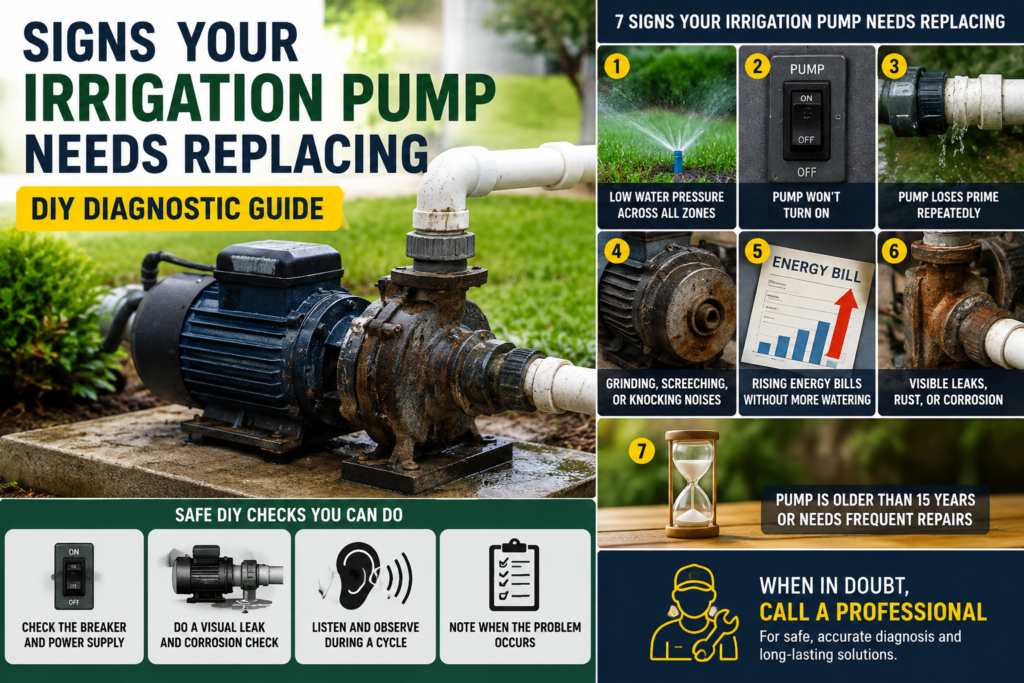
7 Signs Your Irrigation Pump Needs Replacement
1. Your Sprinkler System Has Low Water Pressure
Low water pressure is one of the most noticeable warning signs of a possible irrigation pump problem.
You may notice sprinkler heads failing to pop up fully, water spraying unevenly, or certain areas of your lawn receiving less water than usual. Some sprinkler heads may produce a fine mist instead of a consistent spray, while other areas may remain dry.
However, low pressure does not automatically mean the pump needs replacement.
A clogged sprinkler head, leaking pipe, damaged valve, blocked intake screen, or partially closed valve can produce similar symptoms. A problem affecting only one zone is more likely to involve that zone’s components than the pump itself.
If every zone experiences a noticeable pressure drop, the pump or main water supply deserves closer inspection.
A worn impeller, damaged motor, suction-side air leak, or inadequate water supply can prevent the system from delivering the required pressure.
Start by observing whether the problem affects one zone or the entire property. Avoid adjusting pressure settings without understanding the system’s requirements.
For additional troubleshooting guidance, read our guide on other causes of low irrigation pressure.
If the pressure remains low after simpler causes have been ruled out, professional pump testing can help determine whether irrigation pump replacement is necessary.
2. The Irrigation Pump Will Not Turn On
A pump that refuses to start can interrupt your entire watering schedule.
When the irrigation controller activates a zone, you may hear nothing from the pump. In other cases, you might hear a clicking sound or a brief hum without the pump starting normally.
Several problems can cause this behavior, including a tripped circuit breaker, faulty pressure switch, failed capacitor, damaged wiring, or motor failure.
Before assuming the pump has reached the end of its service life, check whether the irrigation controller is operating normally and look for obvious signs of a power interruption.
Do not open electrical enclosures or touch exposed wiring. Electrical testing should be handled by a qualified professional.
If the power supply is confirmed to be working and the pump still fails to start, a technician can test the motor, capacitor, switching components, and other relevant parts.
A failed capacitor or pressure switch may be repairable without replacing the entire pump. However, a severely damaged motor or an older pump with several failing components may make replacement the more practical option.
Repeatedly resetting a breaker that trips again is not a solution. Stop operating the equipment and arrange professional inspection.
3. The Pump Keeps Losing Prime
Many irrigation pumps need to remain filled with water to operate correctly. Losing prime means the pump can no longer maintain the water-filled condition required for normal operation.
You might notice the pump working during one watering cycle but struggling to build pressure during the next. It may run without delivering enough water, or the sprinkler system may stop receiving water altogether.
Common causes include air entering through a loose suction connection, a damaged seal, a leaking suction pipe, a faulty foot valve, or an inadequate water supply.
A pump can also lose prime if the water level drops below the intake or the suction line develops a leak.
Repeated priming problems do not always mean the pump needs replacement. Sometimes, repairing a connection or replacing a faulty valve solves the issue.
However, persistent problems can indicate worn internal seals, damaged components, or other conditions that require more extensive repairs.
Avoid running a pump dry. Operating without sufficient water can cause overheating and damage internal components.
If the pump repeatedly loses prime after the underlying suction-line problems have been addressed, professional testing can help establish whether repair or irrigation pump replacement is the better choice.
4. You Hear Grinding, Screeching, or Knocking Sounds
An irrigation pump normally produces a steady operating sound. New or unusually loud noises deserve attention.
Grinding can indicate bearing wear or internal mechanical damage. Screeching may point to a problem with the motor or rotating components. Knocking and rattling can result from loose parts, vibration, debris, or other mechanical issues.
Cavitation, which occurs when water flow conditions cause vapor bubbles to form and collapse inside the pump, can also produce unusual noise and damage components over time.
Not every unusual sound means the pump is beyond repair. Loose mounting hardware, restricted water flow, or another correctable problem may be responsible.
Nevertheless, continuing to operate a pump that makes severe grinding or knocking noises can worsen the damage.
If the sound is new, loud, or accompanied by burning smells, overheating, or loss of water flow, switch off the equipment using the normal safe controls if possible and arrange an inspection. Do not open the pump housing or attempt internal repairs yourself.
A professional can inspect the bearings, impeller, motor, mounting, and water supply to determine whether the problem can be repaired economically.
5. Your Energy Bills Increase Without Additional Watering
An unexpected increase in electricity use can sometimes indicate that your irrigation pump is operating inefficiently.
For example, a damaged pump may struggle to deliver the required flow and pressure. A system with leaks, restrictions, or incorrect operating conditions may also run longer than necessary or use more energy than expected.
If your watering schedule has not changed but your electricity bill increases, consider whether the irrigation system is contributing to the difference.
First, compare your current usage with previous bills and check whether other electrical equipment or seasonal conditions could explain the increase.
Then observe whether the pump runs longer than usual, struggles to build pressure, or cycles on and off repeatedly.
A pump that runs continuously because of a control problem may waste electricity even when its motor remains in reasonable condition. A leaking irrigation line or malfunctioning valve can also create unnecessary operating time.
A technician can evaluate the pump’s electrical consumption, operating pressure, flow rate, and control settings.
If the pump is old and its efficiency has deteriorated significantly, replacing it with a correctly sized model may improve performance. However, replacement should follow a proper diagnosis rather than an assumption based on the energy bill alone.
6. You Notice Leaks, Rust, or Corrosion Around the Pump
Water collecting around the pump, rust stains on the housing, or visible corrosion can indicate that a component needs attention.
Leaks may originate from pipe connections, fittings, mechanical seals, or the pump casing itself. A loose fitting may be relatively simple to repair, while a cracked housing or extensively corroded assembly may require pump replacement.
Coastal properties in Northwest Florida face additional environmental challenges. Salt-laden air can accelerate corrosion on exposed metal components, particularly when equipment lacks suitable protection.
If you live in Fort Walton Beach, Destin, or another coastal community, periodically inspecting the pump’s exterior can help you identify deterioration before it causes a more serious failure.
Look for unusual moisture, corrosion around joints, damaged fittings, and water pooling near the equipment. Do not touch electrical components or inspect wet electrical enclosures.
Also remember that not every puddle originates from the pump. A leaking irrigation pipe or nearby connection may be responsible.
A professional inspection can identify the source of the leak and establish whether the affected component can be repaired.
When corrosion has compromised the pump casing or multiple major components, irrigation pump replacement may offer better long-term reliability than repeated repairs.
7. Your Pump Is Old and Requires Frequent Repairs
Age is an important factor when deciding whether to replace an irrigation pump.
Many residential irrigation pumps operate for approximately 10 to 15 years, although actual service life depends on the pump model, water quality, maintenance, installation, operating conditions, and frequency of use.
Some pumps last longer, while others fail earlier because of excessive wear, poor water conditions, or inadequate maintenance.
An older pump does not automatically need replacement. If it performs efficiently and receives regular maintenance, it may continue to provide reliable service.
However, frequent repair calls can indicate that several components are approaching the end of their useful life.
Consider replacement if you experience repeated motor problems, recurring seal failures, persistent loss of prime, or declining performance despite previous repairs.
You should also compare the estimated repair cost with the cost of installing a suitable replacement. The lowest immediate expense is not always the most economical long-term choice.
A professional can assess the pump’s condition and explain the likely benefits and limitations of each option.
Safe DIY Checks Before Calling an Irrigation Professional
Before arranging service, homeowners can perform a few basic observations to help identify the nature of an irrigation problem.
Check the Irrigation Controller
Confirm that the controller is programmed correctly and that the intended watering schedule is active.
An incorrect start time, disabled zone, or controller setting can make a functioning pump appear to have failed.
Look for Obvious Water Leaks
Inspect accessible pipes and fittings for visible moisture or pooling water.
If a leak is present, avoid touching electrical equipment near the affected area. A professional can determine whether the problem originates from the pump or the irrigation plumbing.
Observe Sprinkler Performance
If it is safe to operate the system normally, observe whether pressure problems affect one zone or every zone.
A single affected zone may indicate a local valve, pipe, or sprinkler-head problem. System-wide pressure loss may involve the pump or main water supply.
Listen for Unusual Sounds
Pay attention to new vibration, grinding, rattling, or repeated clicking.
Do not approach exposed moving components or remove protective covers to investigate a noise.
Check for Visible Corrosion
Look at the outside of the pump and accessible connections for rust, damaged fittings, or deterioration.
Avoid handling wet electrical components or opening enclosures.
Know When to Stop Troubleshooting
Do not dismantle the pump, test live electrical connections, replace internal parts, or operate a pump that appears to be running dry.
These tasks can create electrical, mechanical, and water-pressure hazards. If the equipment trips a breaker repeatedly, smells as though it is burning, or makes severe mechanical noises, stop operating it and seek professional help.
For more extensive diagnosis, our sprinkler and irrigation repair services can help identify problems affecting your system.
Irrigation Pump Repair vs. Replacement: Which Is Better?
Deciding between repair and replacement depends on the pump’s condition, the type of failure, its age, and the expected cost of restoring reliable operation.
When Repair May Be the Better Choice
Repair may be appropriate when the pump is relatively new and the problem involves a replaceable component.
Examples include:
- A faulty capacitor, where applicable.
- A defective pressure switch or control component.
- A leaking external connection.
- A worn seal that can be replaced economically.
- A correctable suction-line leak.
- A blocked intake that can be safely cleaned by a professional.
These problems may be resolved without replacing the complete pump.
Before authorizing a repair, ask the technician to explain what failed, why it happened, and whether other components show signs of deterioration.
When Replacement Makes More Sense
Irrigation pump replacement may be the more practical option when the pump has sustained major mechanical damage or has become unreliable despite repeated repairs.
Replacement deserves consideration when:
- The motor or pump casing has suffered major damage.
- The impeller or other internal components are extensively worn.
- The pump repeatedly fails after previous repairs.
- Several major components need attention at the same time.
- Replacement parts are difficult to obtain.
- The existing pump is poorly matched to the property’s water demand.
- The total repair expense approaches the cost of a suitable new installation.
An appropriately sized replacement may offer more dependable operation and reduce the likelihood of recurring service interruptions.
However, a new pump will not solve every irrigation problem. Incorrect pipe sizing, water-source limitations, leaking valves, and electrical or controller faults may continue to affect performance if they are not addressed.
The best decision comes from comparing the condition of the existing equipment with the expected performance, installation cost, and warranty of a replacement.
How Much Does Irrigation Pump Replacement Cost?
The cost of replacing an irrigation pump varies according to the pump type, required capacity, installation conditions, and any additional repairs.
A straightforward replacement using compatible equipment may involve less work than an installation that requires new plumbing, electrical adjustments, changes to the pump mounting, or modifications to the water supply.
Important cost factors include:
Pump type and capacity: Different systems require different pump configurations. A small residential lawn may need a different solution from a large property with many irrigation zones.
Water source: A well, pond, storage tank, or other source can affect the equipment and installation requirements.
Installation complexity: Existing pipework, electrical connections, accessibility, and mounting conditions can affect labor requirements.
Additional repairs: Damaged suction lines, leaking fittings, faulty valves, or other underlying issues may need attention during replacement.
Testing and setup: Correct installation includes checking operation and verifying that the system delivers suitable pressure and flow.
Because these factors vary between properties, a professional evaluation is the most reliable way to obtain an accurate estimate.
When requesting a quote, ask whether it includes the pump, labor, necessary fittings, system testing, and any applicable warranty. Also ask whether the proposed pump is correctly sized for your irrigation system.
Choosing equipment based only on the lowest purchase price can lead to poor performance if the pump does not meet the property’s actual requirements.
What Happens During Professional Irrigation Pump Replacement?
A proper replacement involves more than removing the old pump and connecting a new one.
1. Inspecting the Existing System
The technician begins by examining the existing pump, water source, suction line, discharge plumbing, controls, and overall irrigation performance.
This inspection helps determine whether the pump has failed or whether another problem is responsible for the symptoms.
2. Determining the Required Pump Capacity
The replacement pump must match the system’s required flow rate and pressure.
Factors include the number of irrigation zones, sprinkler-head requirements, pipe dimensions, elevation differences, and the characteristics of the water source.
An oversized pump may create excessive pressure or unnecessary energy use. An undersized pump may fail to deliver adequate water to the sprinkler system.
3. Removing the Existing Pump
Once the equipment has been safely disconnected and isolated, the old pump can be removed.
The technician may also inspect the mounting surface, pipe connections, and nearby components for deterioration or damage.
4. Installing the Replacement
The new pump is installed according to its specifications and the requirements of the existing system.
Depending on the project, this may involve replacing fittings, correcting plumbing issues, making appropriate electrical connections, or adjusting related controls.
5. Testing Pressure and Flow
After installation, the system should be tested to confirm that the pump starts and operates correctly.
The technician can check for leaks, unusual vibration, pressure fluctuations, and other problems that may affect performance.
6. Confirming Reliable System Operation
The final step is to verify that the pump delivers water as intended and that the irrigation zones operate appropriately.
If the original problem resulted from a separate issue, additional work may be required to restore normal performance.
Our irrigation pump installation and replacement service provides information about pump installation and replacement for homeowners in Okaloosa County.
Why Timely Pump Replacement Matters for Your Lawn
A failing irrigation pump can affect lawn health well before it stops working completely.
When water pressure or flow becomes inadequate, sprinkler heads may not distribute water evenly. Some parts of the lawn may receive too little water while other areas receive sufficient coverage.
In Northwest Florida, hot weather can increase the risk of turf stress when irrigation becomes unreliable.
Uneven watering may lead to dry patches, weakened grass, and slower recovery after periods of heat. Repeated interruptions can also make it more difficult to maintain a consistent watering schedule.
A failing pump may create additional maintenance costs if the underlying issue causes repeated service calls or damages related components.
Water waste is another concern. The EPA WaterSense program explains that irrigation leaks can waste substantial amounts of water over time. A small leak, however, does not automatically mean the pump itself is failing.
The important step is to identify the source of the problem and correct it before unnecessary water use or lawn damage continues.
Timely repair or replacement can help restore dependable irrigation, protect turf health, and reduce avoidable operating problems.
How to Extend the Life of Your New Irrigation Pump
Once your pump has been repaired or replaced, regular maintenance can help it operate reliably for longer.
For additional maintenance guidance, the EPA WaterSense program recommends seasonal sprinkler system inspections to identify leaks, improve irrigation efficiency, and prevent unnecessary water waste.
Schedule Seasonal Irrigation Inspections
Inspect the system before the main watering season begins.
A seasonal inspection can identify leaking connections, damaged sprinkler heads, blocked filters, and other problems that may affect pump performance.
The EPA WaterSense program also provides guidance on seasonal sprinkler maintenance and improving irrigation efficiency.
Monitor Pressure and Water Flow
Pay attention to changes in sprinkler performance.
A sudden drop in pressure, repeated pump cycling, or unusual noise may indicate a problem that deserves attention before it becomes more serious.
Protect the Pump From Environmental Damage
Keep the pump area clean and follow the manufacturer’s recommendations for suitable protection from weather and debris.
In coastal areas, periodically inspect exposed metal components for corrosion. Any protective enclosure must meet the equipment’s ventilation and access requirements.
Address Leaks Promptly
Leaking pipes and fittings can waste water and affect system performance.
Repairing plumbing problems early can help prevent additional damage and make it easier to distinguish irrigation-line issues from pump failures.
Keep the Water Source Suitable
Sand, sediment, debris, and inadequate water supply can affect pump operation, depending on the system design.
Follow the manufacturer’s maintenance recommendations for intake screens, filtration, and other components.
Use the Correct Pump for Your System
A replacement pump should be selected according to actual flow and pressure requirements rather than motor size alone.
Professional sizing can help avoid unnecessary strain and ensure the system receives the water it needs.
Avoid Unnecessary Operation
Use an appropriate watering schedule and ensure the controller operates the intended zones correctly.
If the pump begins running continuously or repeatedly switches on and off unexpectedly, arrange an inspection instead of allowing the problem to continue.
Irrigation Pump Replacement Services in Okaloosa County
Homeowners throughout Northwest Florida depend on reliable irrigation to maintain healthy lawns and landscapes.
If your pump is losing pressure, struggling to start, making unusual noises, or requiring repeated repairs, a professional diagnosis can help determine the most appropriate next step.
Summit Outdoors provides irrigation-related services for homeowners in Okaloosa County, including Fort Walton Beach, Niceville, Destin, Shalimar, and nearby communities.
Our service options include irrigation pump installation and replacement, along with sprinkler system repair for problems affecting irrigation performance.
Whether your system needs a targeted repair or a complete pump replacement, an accurate assessment can help you avoid unnecessary expenses and restore dependable watering.
For additional local information, explore our service pages for Fort Walton Beach, Niceville, Destin, and Shalimar.
Need Help With Irrigation Pump Replacement?
If your irrigation pump is showing signs of failure, a timely inspection can help you understand your options before the problem becomes more disruptive.
Summit Outdoors helps homeowners throughout Okaloosa County diagnose irrigation problems and determine whether repair or replacement is the right solution.
Contact our team through the Summit Outdoors contact page to discuss your irrigation system and arrange an evaluation.
Frequently Asked Questions About Irrigation Pump Replacement
How long does an irrigation pump usually last?
Many residential irrigation pumps last approximately 10 to 15 years. Actual service life varies depending on equipment quality, maintenance, water conditions, operating frequency, and environmental exposure.
How do I know if my irrigation pump needs replacing?
Common warning signs include system-wide pressure loss, repeated loss of prime, persistent starting problems, unusual mechanical noises, visible pump damage, and frequent repairs. A professional diagnosis can help determine whether replacement is necessary.
Can an irrigation pump be repaired instead of replaced?
Yes. Problems involving certain capacitors, switches, seals, fittings, and suction-line connections may be repairable. Major motor damage, extensive corrosion, or repeated failures may make replacement more economical.
Why does my irrigation pump keep losing prime?
Possible causes include air entering the suction line, leaking fittings, worn seals, a faulty foot valve, or an insufficient water supply. Persistent problems should be inspected before the pump is operated again.
Why does my irrigation pump run but produce little water?
Possible causes include a blocked intake, inadequate water supply, suction leaks, a worn impeller, or restrictions elsewhere in the system. A technician can test the pump and plumbing to identify the underlying issue.
Why will my irrigation pump not turn on?
A tripped breaker, control problem, faulty capacitor, defective pressure switch, wiring fault, or damaged motor can prevent a pump from starting. Electrical testing should be performed by a qualified professional.
Is it safe to replace an irrigation pump myself?
Pump replacement can involve electrical connections, pressurized plumbing, and equipment-specific installation requirements. Homeowners should avoid internal electrical work and consult a qualified professional for diagnosis and installation.
How much does irrigation pump replacement cost?
The price depends on the pump type, required capacity, installation complexity, and any additional plumbing or electrical work. A property-specific assessment provides the most accurate estimate.
Can a new irrigation pump improve sprinkler pressure?
A correctly selected replacement may restore pressure when the original pump is worn or damaged. However, low pressure caused by leaks, clogged components, water-supply limitations, or incorrect plumbing will require those issues to be addressed as well.
How can I prevent future irrigation pump problems?
Schedule seasonal inspections, monitor pressure and flow, repair leaks promptly, protect the pump from environmental damage, and follow the manufacturer’s maintenance recommendations.