Low water pressure in irrigation systems can leave your lawn dry, create uneven watering, and prevent sprinkler heads from covering the entire yard. If some sprinkler heads spray weakly or certain areas receive less water than others, your irrigation system may have a pressure-related problem.
Understanding the causes of low water pressure in irrigation systems helps you identify the issue and choose the right solution. Problems can range from clogged sprinkler heads and leaking pipes to faulty valves, undersized plumbing, or an inadequate water supply.
In this guide, we’ll explain how to diagnose irrigation pressure problems, identify common causes, and restore more consistent sprinkler performance.
What Causes Low Water Pressure in Irrigation Systems?
Low water pressure in irrigation systems occurs when water cannot reach sprinkler heads at the pressure needed for proper operation. The problem may affect the entire irrigation system or only one zone.
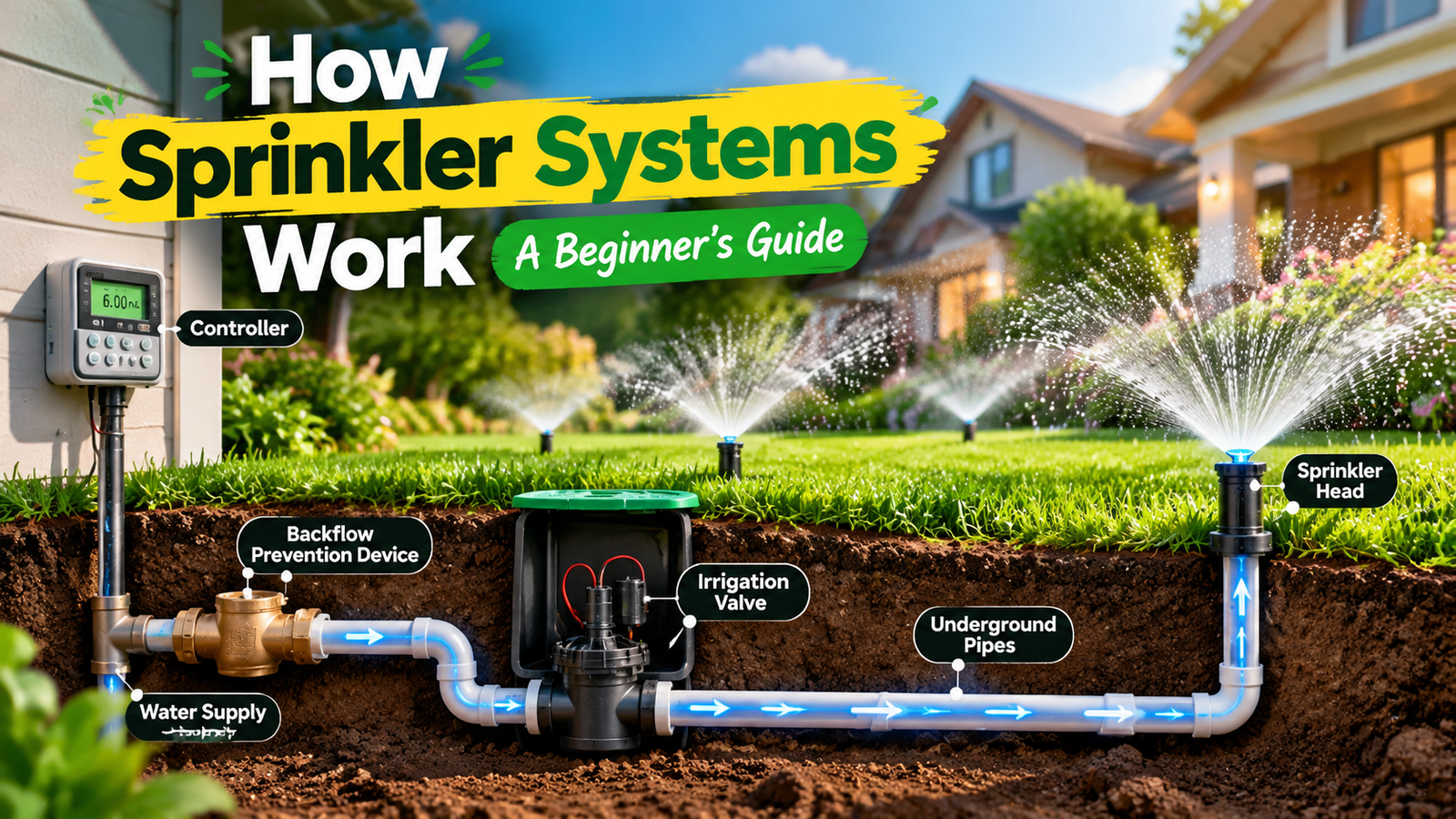
If all sprinkler zones have weak spray, the problem may involve the main water supply, backflow device, pressure regulator, or mainline. If only one zone is affected, clogged nozzles, damaged pipes, or a faulty zone valve may be responsible.
Identifying whether the issue affects one zone or the whole system is an important first step toward finding the right solution.
Common Causes of Low Water Pressure in Irrigation Systems
1. Clogged Sprinkler Heads and Nozzles
Dirt, sand, mineral deposits, and small debris can block sprinkler nozzles. When water cannot flow freely through the nozzle, spray distance and coverage may decrease.
Inspect the affected sprinkler heads for visible dirt or damage. Turn off the irrigation system before removing or cleaning components, and follow the manufacturer’s instructions.
2. Leaking Irrigation Pipes
Cracked pipes, loose fittings, and damaged connections can allow water to escape before it reaches the sprinkler heads. A leak may cause weak spray, soggy soil, standing water, or unusually high water usage.
Inspect the lawn for wet patches, erosion, bubbling water, or areas that remain saturated. Repairing a damaged pipe or fitting can help restore normal pressure and prevent water waste.
If you suspect a larger underground leak, consider professional sprinkler repair services to help identify and resolve the problem.
3. Faulty Irrigation Valves
Irrigation valves control the flow of water into individual zones. A valve that does not open fully may restrict water flow and reduce sprinkler performance.
Check whether the affected zone activates correctly and whether its valve appears damaged or obstructed. Valve problems may require cleaning, adjustment, or replacement, depending on the cause.
4. Problems With the Main Water Supply
Your irrigation system depends on an adequate water supply. If household water pressure is low or several water-using appliances operate simultaneously, sprinkler performance may decrease.
Check whether the pressure problem affects other outdoor faucets or plumbing fixtures. If the entire property experiences low pressure, contact your water provider or a qualified plumber to investigate the supply.
For background information about how pressure works, see Water pressure on Wikipedia.
5. Backflow Preventer or Pressure Regulator Issues
Backflow prevention devices help protect the drinking water supply from contamination. However, a malfunctioning device or partially closed valve can restrict water entering the irrigation system.
Pressure regulators can also affect system performance when they are incorrectly adjusted or failing. These components should be inspected carefully, and any repair should follow local plumbing requirements and manufacturer recommendations.
6. Too Many Sprinkler Heads Running at Once
An irrigation zone must be designed to supply enough water for all the sprinkler heads operating together. If the zone contains too many heads or requires more water than the supply can deliver, pressure and spray coverage may suffer.
Check whether the issue occurs only when a particular zone runs. A professional irrigation assessment can determine whether the zone needs redesign, different sprinkler nozzles, or a better distribution of watering demand.
7. Undersized Pipes or Restricted Plumbing
Pipes that are too small for the system’s flow requirements can create excessive pressure loss. Mineral buildup, partially closed shutoff valves, and other restrictions may also reduce the amount of water reaching sprinkler heads.
If basic cleaning and leak checks do not solve the problem, a qualified irrigation professional can assess pipe sizing, flow requirements, and possible restrictions.
How to Diagnose Low Water Pressure in Irrigation Systems
Before replacing equipment, perform a few basic checks to narrow down the cause.
Step 1: Run Each Irrigation Zone Separately
Turn on one zone at a time and observe the sprinkler heads. If every zone has weak spray, investigate the main water supply and shared components. If only one zone has a problem, focus on its heads, valve, and pipes.
Step 2: Inspect Sprinkler Heads
Look for clogged nozzles, broken heads, tilted sprinkler bodies, and heads that fail to pop up fully. Clean or replace damaged components according to the manufacturer’s instructions.
Step 3: Look for Signs of Leaks
Check for unusually wet soil, standing water, muddy patches, or water bubbling up while a zone operates. These signs may indicate a leak or damaged underground pipe.
Step 4: Check Valves and Shutoff Points
Confirm that accessible irrigation shutoff valves are fully open and that the system is operating as intended. Do not force stuck valves or dismantle pressurized equipment.
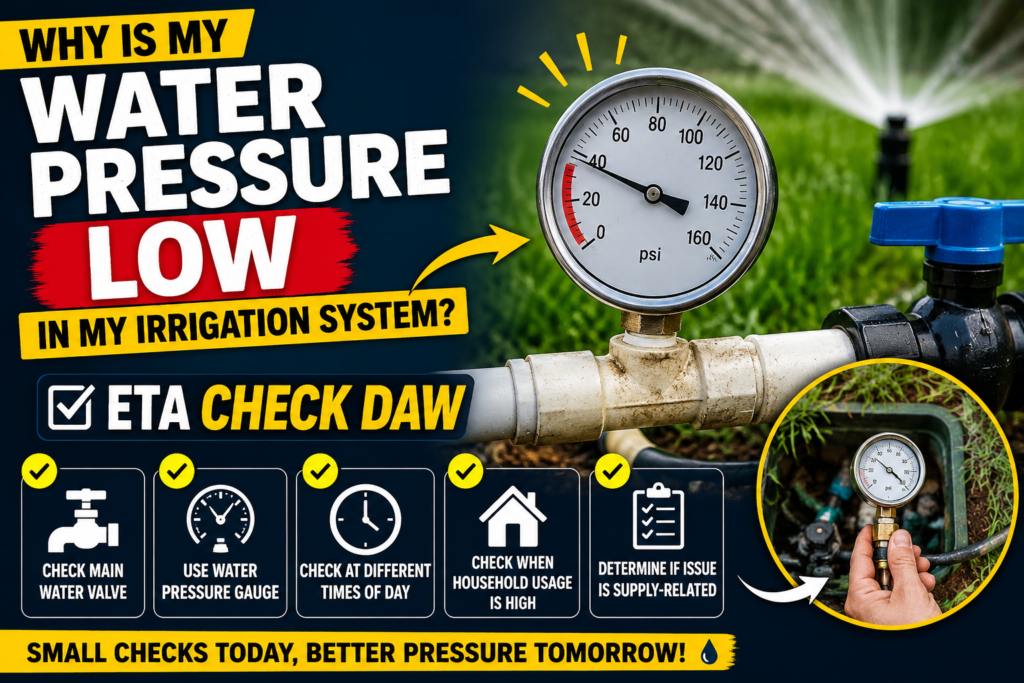
Step 5: Consider Measuring Pressure
A suitable pressure gauge can help determine whether the system is receiving adequate pressure. Measurements should be taken at an appropriate test point and interpreted according to the irrigation system’s specifications.
Pressure and flow are related but different. A system may have reasonable static pressure while still struggling to supply enough water when multiple sprinkler heads are running.
For practical water-saving information and outdoor watering guidance, visit the EPA WaterSense program.
Low Water Pressure vs. Low Water Flow
Low water pressure and low water flow can produce similar symptoms, but they are not the same problem.
Low water pressure means the force pushing water through the system is insufficient for the equipment to operate correctly.
Low water flow means the system is not delivering enough water volume to meet demand. Restrictions, undersized pipes, leaks, or an inadequate water supply can contribute to low flow.
Both problems can lead to short spray distances, uneven coverage, and dry patches. Correct diagnosis helps avoid replacing parts that are working properly.
How to Fix Low Water Pressure in Irrigation Systems
The best solution depends on what is causing the pressure loss. Start with simple inspections before considering major repairs.
1. Clean or Replace Clogged Nozzles
Remove debris from clogged sprinkler nozzles and clean them according to the manufacturer’s recommendations. Replace cracked or worn nozzles that no longer distribute water correctly.
2. Repair Leaking Pipes and Connections
Repair damaged pipes, loose fittings, and leaking connections. Underground leaks may require excavation and should be handled carefully to avoid damaging nearby utilities.
3. Repair Faulty Valves
A valve that does not open fully may restrict water flow to a zone. Inspect the valve for visible damage and seek professional assistance if electrical, internal, or pressure-related faults are suspected.
4. Check the Water Supply
If pressure is low throughout the property, the issue may be outside the irrigation system. Contact your water provider or a qualified plumber when necessary.
5. Inspect the Backflow Device and Regulator
Have restricted or malfunctioning backflow equipment and pressure regulators inspected by a qualified professional. Do not bypass backflow protection or make adjustments that violate local requirements.
6. Review Zone Design
If a zone demands more water than the supply can provide, consider adjusting the layout or dividing the zone into smaller sections. A professional can assess pipe sizes, sprinkler types, spacing, and flow requirements.
7. Schedule Professional Irrigation Inspection
When the cause remains unclear or pressure problems keep returning, a professional inspection can help identify hidden leaks, restricted pipes, valve faults, and system design issues.
For help with irrigation system troubleshooting, repairs, or maintenance, visit Summit Outdoor Irrigation.
Preventing Future Irrigation Pressure Problems
Regular maintenance can help keep your sprinkler system operating efficiently and reduce the likelihood of recurring pressure issues.
- Inspect sprinkler heads for damage, blockage, and uneven spray patterns.
- Check your lawn for unusually wet areas that may indicate leaks.
- Clean nozzles when needed and replace worn components.
- Confirm that accessible shutoff valves are in their proper operating position.
- Monitor each irrigation zone during scheduled watering.
- Adjust watering schedules to suit seasonal conditions and your lawn’s needs.
- Arrange periodic professional inspections when the system shows recurring problems.
The EPA’s WaterSense resources also provide useful guidance on outdoor water efficiency and responsible watering practices.
Conclusion
Low water pressure in irrigation systems can result from clogged sprinkler heads, leaking pipes, faulty valves, water supply restrictions, or irrigation zones that demand more water than the system can provide.
Start by checking whether the issue affects one zone or the entire system. Then inspect sprinkler heads, look for leaks, and check accessible valves. If the problem persists, professional diagnosis can help identify the underlying cause and prevent unnecessary repairs.
With regular maintenance and timely repairs, you can improve sprinkler coverage, reduce water waste, and help keep your lawn healthy.
Frequently Asked Questions
Why is my sprinkler system losing water pressure?
Common causes include clogged nozzles, leaking pipes, partially closed valves, faulty backflow equipment, and an inadequate water supply. Inspect the affected zones to narrow down the cause.
Why do some sprinkler heads have low pressure while others work normally?
This often points to a localized problem, such as a clogged nozzle, damaged sprinkler head, leaking pipe, or faulty zone valve. Inspect the affected area before investigating the entire system.
Can a water leak cause low irrigation pressure?
Yes. A leaking pipe or fitting can divert water away from sprinkler heads, reducing pressure and affecting coverage. Wet soil and standing water may indicate a leak.
How can I improve irrigation pressure?
Start by cleaning clogged sprinkler heads, inspecting for leaks, and checking accessible valves. If the problem affects the whole property or continues after basic checks, contact a qualified irrigation professional.
Should I install a booster pump to increase sprinkler pressure?
Not necessarily. A booster pump may not solve problems caused by leaks, clogged pipes, faulty valves, or inadequate water flow. Have the system assessed first to determine whether a pump is appropriate and permitted.
How often should I inspect my irrigation system?
Inspect your system regularly during the watering season and whenever you notice uneven coverage, weak spray, leaks, or unusual water usage. Periodic maintenance can help identify small problems before they become costly repairs.