Low Water Pressure in Sprinkler System Zones: 11 Causes & Fixes
Low water pressure in sprinkler system zones can lead to weak spray, uneven lawn coverage, and dry patches. The problem may come from clogged sprinkler heads, leaking pipes, faulty valves, or an insufficient water supply.
The right solution depends on where the pressure loss occurs. One weak sprinkler head usually indicates a local problem, while an entire weak zone may point to a valve or pipe issue.
If every zone is affected, the cause may involve the main water supply, a filter, or an irrigation pump. Identifying the source first helps prevent unnecessary repairs and replacement costs.
Signs Your Sprinkler System Has Low Water Pressure
Low sprinkler pressure often develops gradually. Several symptoms can indicate that your irrigation system is not delivering enough water.
Common signs include:
- Weak, misty, or dribbling spray from sprinkler heads
- Sprinkler heads that fail to pop up completely
- Shorter spray distance and incomplete lawn coverage
- Weak water output near the end of a sprinkler zone
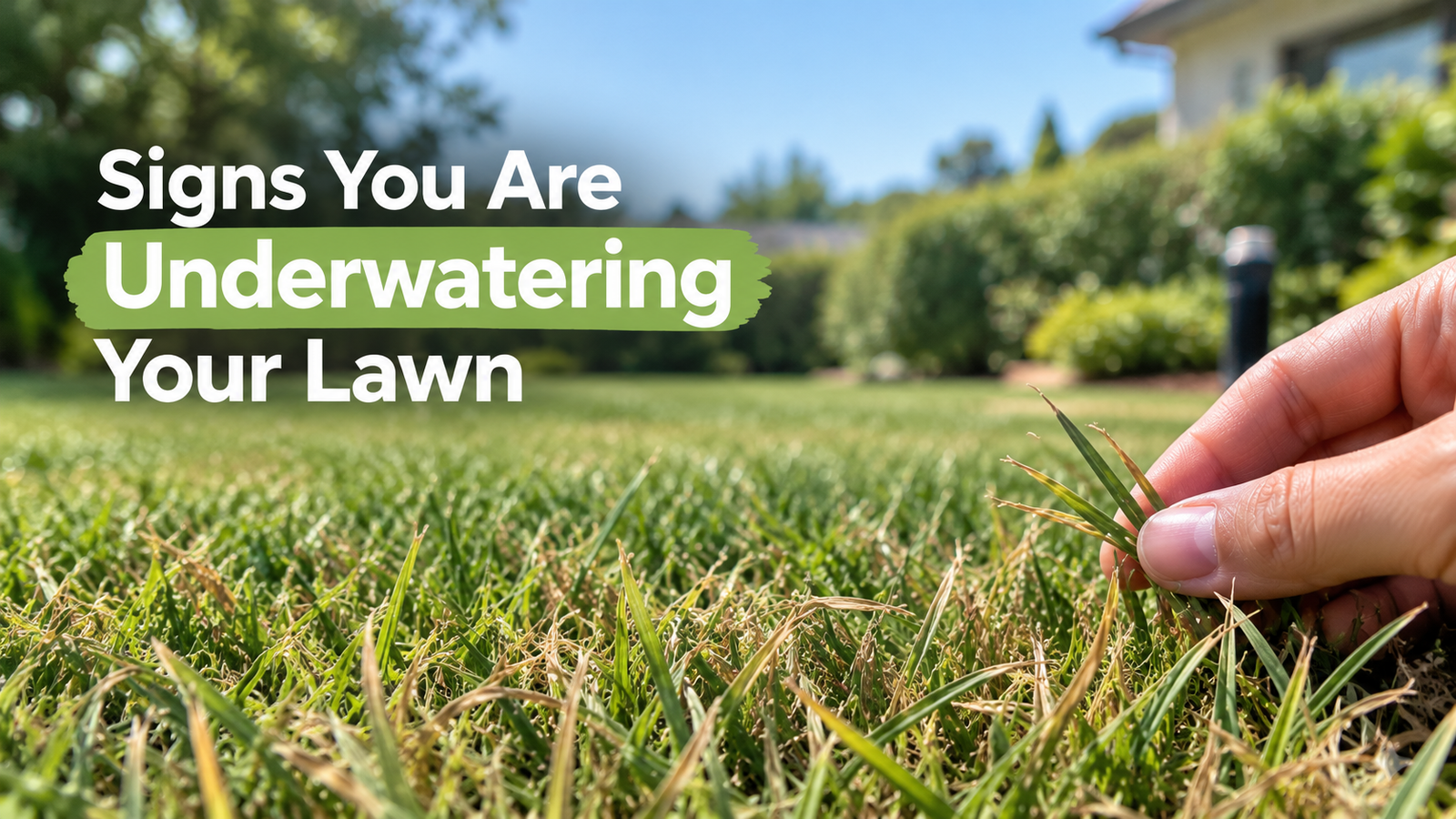
- Dry or brown patches despite regular watering
- Pressure that drops when multiple heads operate together
These symptoms can have different causes. The most useful first step is to determine whether the problem affects one head, one zone, or the entire system.
First, Identify Where the Pressure Problem Occurs
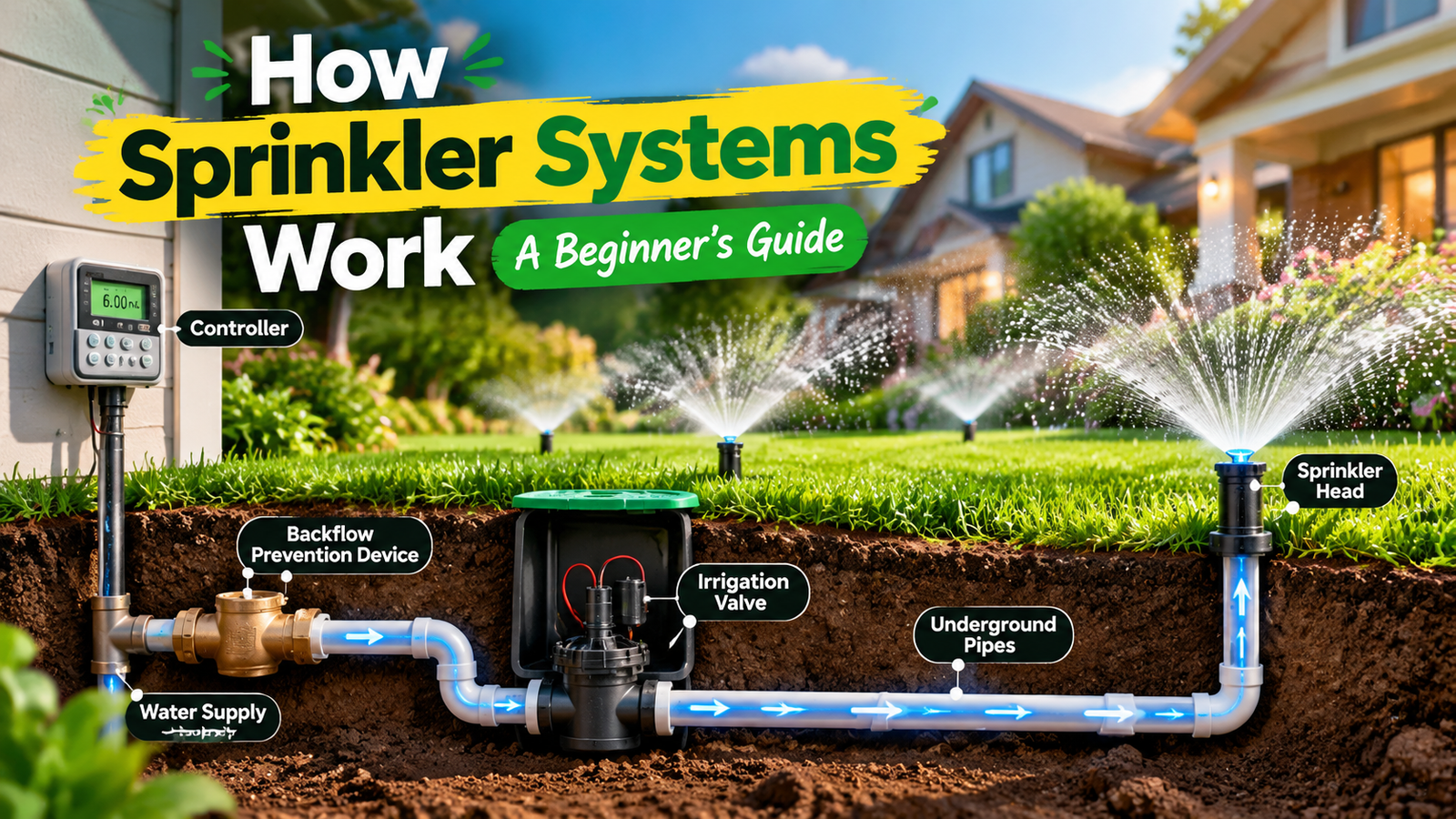
Sprinkler systems operate in separate zones. Each zone has its own valve, pipe network, and sprinkler heads.
A problem affecting one zone may not affect the others. Identifying the pattern helps narrow down the possible causes before you start repairing components.
Low Pressure at One Sprinkler Head
If only one sprinkler head has weak spray, inspect the head and its immediate connections. A clogged nozzle, damaged riser, worn seal, or loose fitting may be responsible.
Cleaning the nozzle or replacing a damaged component may restore normal performance. Check nearby heads to confirm that the problem is isolated.
Low Pressure in One Irrigation Zone
When every head in one zone performs poorly but other zones work normally, investigate that zone’s valve and lateral pipe.
A partially opening valve, underground leak, or restricted pipe can reduce water delivery throughout the affected zone. An overloaded zone with too many sprinkler heads can produce similar symptoms.
Low Pressure Throughout the Entire System
If all sprinkler zones have weak pressure, investigate components shared by the entire system.
Possible causes include a partially closed main valve, clogged filter, municipal supply problem, or failing irrigation pump. Testing household water pressure can also help determine whether the issue extends beyond the irrigation system.
11 Common Causes of Low Water Pressure in Sprinkler System Zones
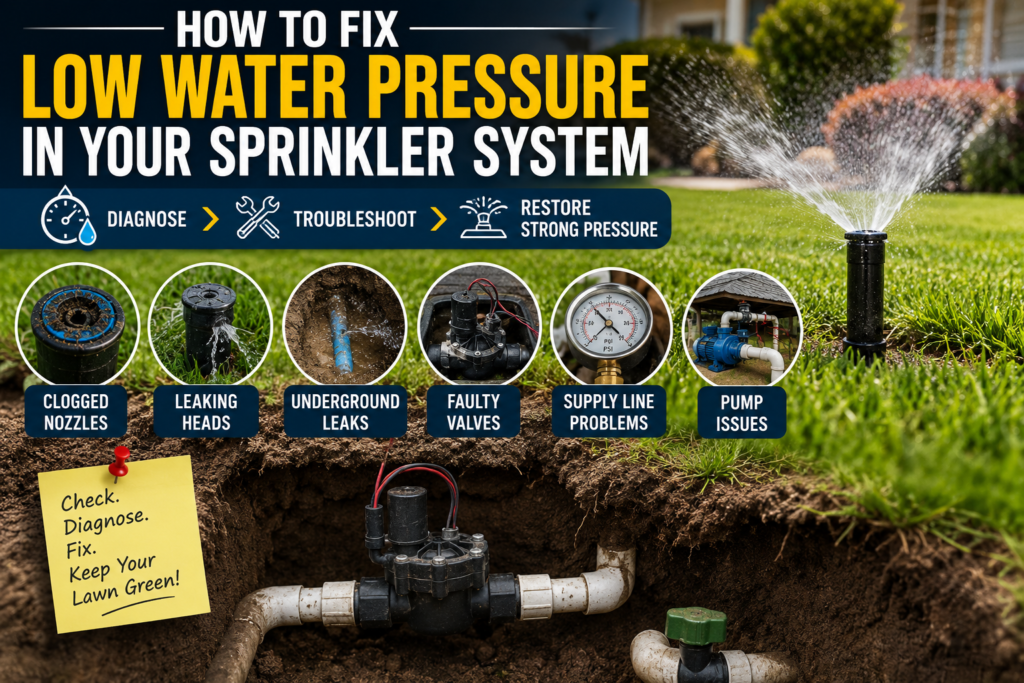
1. Clogged Sprinkler Heads or Nozzles
Dirt, sand, and mineral deposits can accumulate inside sprinkler nozzles. These obstructions restrict water flow and produce weak or uneven spray patterns.
Inspect the affected nozzle and clean it according to the manufacturer’s instructions. If the nozzle is damaged or heavily obstructed, replacing it may be necessary.
2. Broken or Leaking Sprinkler Heads
A cracked sprinkler body, damaged seal, or loose connection can allow water to escape around the head. This reduces the amount of water reaching the intended spray outlet.
Look for water pooling around the sprinkler while the zone operates. Replace damaged components and check that the head is correctly positioned.
3. Underground Irrigation Pipe Leaks
A damaged underground pipe can release water before it reaches the sprinkler heads. The resulting pressure loss may affect several heads downstream.
Look for soggy soil, unusually green grass, bubbling ground, or unexplained wet patches. Underground leaks may require professional leak detection before excavation begins.
For additional troubleshooting information, read our complete sprinkler problems and diagnosis guide.
4. Partially Closed Water Supply Valves
A main shutoff valve or backflow preventer isolation valve that is not fully open can restrict water entering the irrigation system.
Check accessible valves and confirm that they are in their normal operating positions. If a valve is damaged or difficult to operate, have it inspected rather than forcing it.
5. Faulty Zone Valve or Solenoid
Each irrigation zone uses a valve to control water flow. Debris inside the valve, a damaged diaphragm, or a faulty solenoid can prevent the valve from opening properly.
This often causes low pressure in one zone while the others operate normally. A professional inspection can determine whether the valve needs cleaning, repair, or replacement.
6. Dirty or Clogged Irrigation Filter
Filters remove sediment and debris from irrigation water. Over time, accumulated material can restrict flow and reduce system performance.
Check accessible filters according to the manufacturer’s maintenance instructions. Clean or replace the filter element when necessary, following the system’s pressure-release and isolation procedures.
7. Too Many Sprinkler Heads in One Zone
Every irrigation zone is designed to deliver a specific flow rate, measured in gallons per minute (GPM). Adding too many heads can exceed the available water supply.
When demand exceeds capacity, multiple sprinkler heads may produce weak spray. The solution may involve redesigning the zone, adjusting nozzle flow, or redistributing heads to match the available supply.
8. Municipal Water Supply Problems
Sometimes the irrigation system is functioning correctly, but the incoming water supply is inadequate. Municipal pressure fluctuations or supply restrictions can affect irrigation performance.
Check whether indoor faucets also have unusually weak flow. If household water pressure has dropped suddenly, contact your water provider or a qualified plumber to investigate the supply.
9. Pressure Regulator Problems
Some irrigation systems use pressure regulators to maintain suitable operating pressure. An incorrectly adjusted or malfunctioning regulator can restrict flow or allow excessive pressure.
Check the regulator specifications and the requirements of your installed sprinkler heads. Not every system needs an additional regulator, so avoid installing one without confirming the cause of the problem.
10. Irrigation Pump Problems
Properties that draw irrigation water from a well or pond may rely on a pump to deliver sufficient pressure and flow. A pump that cannot maintain its normal output can weaken every zone.
Other possible causes include a clogged intake screen, failing pressure switch, faulty check valve, or electrical problem. These symptoms do not automatically mean the pump needs replacement.
For professional assistance, see our irrigation pump installation and service information.
11. Incorrect Pipe Sizing or System Design
Water loses pressure as it travels through pipes. Long pipe runs, undersized pipes, numerous fittings, and elevation changes can increase friction losses.
Older irrigation systems may also have additional sprinkler heads that were installed without updating the original design. If a zone has always performed poorly, a flow and pressure assessment can help identify design limitations.
How to Fix Low Water Pressure in Sprinkler System Zones
The best approach is to inspect the system methodically. Start with simple checks before considering more expensive repairs.
Step 1: Run Each Sprinkler Zone Separately
Activate one zone at a time and observe how the sprinkler heads perform. Note which zones have normal coverage and which show weak spray.
This comparison helps determine whether the problem is isolated or affects the entire irrigation system.
Step 2: Inspect the Sprinkler Heads
Examine weak heads for clogged nozzles, damaged risers, loose connections, or visible leaks. Clean accessible nozzles according to the manufacturer’s instructions.
Replace cracked or damaged components when necessary. Check that each head is positioned correctly and is not obstructed by grass or debris.
Step 3: Look for Water Leaks
Run the affected zone and inspect the lawn for unexpected wet areas. Pay attention to bubbling soil, pooling water, or sections that remain unusually soggy.
A hidden pipe leak may require specialized equipment to locate. Avoid digging extensively until the suspected leak location has been confirmed.
Step 4: Check Accessible Valves and the Water Supply
Confirm that accessible main shutoff and backflow isolation valves are fully open. Do not force valves or dismantle pressurized equipment.
Check an indoor faucet to see whether household water flow is also weak. This can help distinguish an irrigation-specific problem from a wider supply issue.
Step 5: Clean Accessible Filters and Nozzles
Inspect accessible filters and nozzle screens for sediment or debris. Follow the manufacturer’s instructions for cleaning and maintenance.
Before opening any filter housing, isolate the supply and release pressure safely. Leave unfamiliar valve assemblies and pressurized components to a qualified professional.
Step 6: Compare the Performance of Different Zones
If one zone remains weak while the others operate normally, focus on its valve, lateral line, and total sprinkler demand.
Compare the number and type of heads with similar zones. If the system has been modified, verify that the pipe size and available flow can support the added demand.
Step 7: Investigate Pump or Supply Problems
When every zone is weak, consider an upstream restriction or inadequate water supply. Systems using a pump may need an assessment of pump output, intake conditions, and pressure controls.
Observe whether pressure drops suddenly, declines gradually, or has always been low. These details can help a technician identify the underlying cause.
Step 8: Arrange Professional Diagnosis
If the pressure problem persists after basic checks, professional testing can help identify hidden leaks, faulty valves, restrictions, or pump issues.
Avoid dismantling electrical components or opening pump assemblies without the necessary experience. Accurate diagnosis can prevent unnecessary replacements and more expensive repairs.
Homeowners in Okaloosa County can arrange professional sprinkler system repair to identify the cause and determine the appropriate repair.
Why Does Only One Sprinkler Zone Have Low Pressure?
When only one zone has weak pressure, the cause is usually specific to that section of the irrigation system. Common possibilities include a faulty zone valve, leaking lateral pipe, clogged components, or excessive sprinkler demand.
Start by comparing the affected zone with other zones. If the others operate normally, the shared water supply is less likely to be the primary cause.
Next, inspect accessible sprinkler heads and look for wet areas along the zone’s pipe route. If these checks do not reveal the problem, a technician can test the valve and measure the available flow.
Why Do My Sprinkler Heads Not Pop Up All the Way?
Sprinkler heads need adequate water pressure and flow to operate as designed. When the available supply is insufficient, some heads may rise only partially or fail to extend.
A clogged nozzle, leaking pipe, restricted filter, faulty valve, or overloaded zone may be responsible. Damaged or obstructed heads can also experience mechanical problems.
If only one head fails to rise, inspect that head first. If several heads in the same zone behave similarly, investigate the valve and pipe supplying the zone.
Can a Leak Cause Low Sprinkler Pressure?
Yes. A leak allows water to escape before it reaches the intended sprinkler heads. This can reduce the available flow and weaken coverage downstream.
Signs include unusually wet soil, soft patches, pooling near valve boxes, or unexplained increases in water consumption. Some underground leaks are difficult to identify because water drains into the surrounding soil.
If you suspect a buried pipe leak, consider professional irrigation system repair before attempting extensive excavation.
Can a Bad Irrigation Pump Cause Low Water Pressure?
Yes. An irrigation pump that cannot maintain sufficient output may cause weak pressure throughout a system that depends on pumped water.
However, similar symptoms can result from a clogged intake, faulty pressure switch, damaged check valve, or electrical issue. Replacing the pump without identifying the actual cause may not solve the problem.
A professional assessment can determine whether the pump needs maintenance, component repair, or replacement. Learn more about our irrigation pump services.
How Much Water Pressure Does a Sprinkler System Need?
The correct operating pressure depends on the sprinkler head model, system design, available flow, pipe dimensions, and elevation changes. There is no single PSI value that suits every irrigation system.
As a general reference, household water pressure is often around 40–60 PSI, but this is not a universal target for sprinkler heads. The pressure required at the sprinkler depends on the manufacturer’s specifications and the system’s operating conditions.
The University of Florida IFAS Extension provides residential irrigation guidance, while the EPA WaterSense program explains how pressure-regulated spray sprinkler bodies can improve performance and water efficiency.
Low pressure can cause poor coverage, but excessive pressure can also create fine mist and waste water. If performance remains inconsistent, have the system’s pressure and flow measured before making adjustments.
Low Sprinkler Pressure in Okaloosa County, FL
Homeowners throughout Okaloosa County may experience irrigation pressure problems caused by clogged nozzles, damaged pipes, worn valves, or pump performance issues. The underlying diagnostic process remains the same regardless of location.
Sandy soil in parts of the region can allow water from an underground leak to drain away before obvious pooling develops. Properties using well-fed irrigation systems may also depend heavily on pump performance.
Whether you live in Fort Walton Beach, Niceville, Destin, or Shalimar, start by determining whether the pressure loss affects one head, one zone, or the entire system.
If the cause is not obvious, professional testing can help locate the fault and determine the appropriate repair.
When Should You Call a Sprinkler Repair Professional?
Basic inspections can resolve some minor problems, but persistent pressure loss may require specialized tools and experience.
Consider professional help when:
- Several zones suddenly lose pressure.
- Cleaning sprinkler heads does not restore normal spray.
- You suspect an underground pipe leak.
- A zone valve fails to open or close correctly.
- The irrigation pump cannot maintain pressure.
- Electrical wiring or control components may be involved.
- Pressure remains low after the initial troubleshooting steps.
A proper diagnosis helps determine whether the problem comes from a leak, valve, restriction, sprinkler head, supply line, or irrigation pump.
Summit Outdoors provides sprinkler system repair in Okaloosa County for homeowners in Fort Walton Beach, Niceville, Destin, Shalimar, and surrounding communities. The company draws on more than 30 years of irrigation industry experience.
For additional troubleshooting advice, explore our complete sprinkler troubleshooting guide.
If your sprinkler system continues to deliver weak or uneven coverage, contact Summit Outdoors to arrange an assessment. Identifying the actual cause first can help prevent unnecessary repairs and restore more consistent irrigation performance.
Frequently Asked Questions
How do I increase water pressure in my sprinkler system?
First, determine whether the problem affects one head, one zone, or the entire system. Cleaning clogged nozzles, repairing leaks, and checking accessible valves may resolve the issue. Persistent pressure loss may require professional testing.
Why does only one sprinkler zone have low pressure?
A faulty zone valve, leaking lateral pipe, restriction, or excessive sprinkler demand may affect just one zone. If all other zones work normally, start by inspecting the affected zone.
Why are my sprinkler heads barely spraying?
Weak spray can result from clogged nozzles, damaged heads, insufficient supply pressure, or too many heads operating on one zone. Comparing nearby heads helps narrow down the cause.
Can clogged sprinkler heads reduce water pressure?
Clogged nozzles restrict water flow and can produce weak or uneven spray. Cleaning or replacing an obstructed nozzle may restore normal performance at the affected head.
Can an underground irrigation leak cause low pressure?
Yes. Water escaping from a buried pipe reduces the amount available to downstream sprinkler heads. Wet soil, unusually green grass, and unexplained water use can indicate a possible leak.
How do I know if my sprinkler pump is going bad?
Possible warning signs include declining pressure, unusual pump noise, frequent cycling, or difficulty maintaining output. These symptoms can also indicate problems with the intake, pressure switch, or check valve.
Can too many sprinkler heads cause low pressure?
Yes. A zone can lose performance when its total water demand exceeds the available flow. The system may need nozzle adjustments or a redesign to distribute the demand correctly.
Should I install a booster pump for my sprinkler system?
Not necessarily. A booster pump may help in certain supply-limited situations, but it will not fix a leaking pipe, clogged filter, or faulty valve. Identify the underlying cause before purchasing additional equipment.