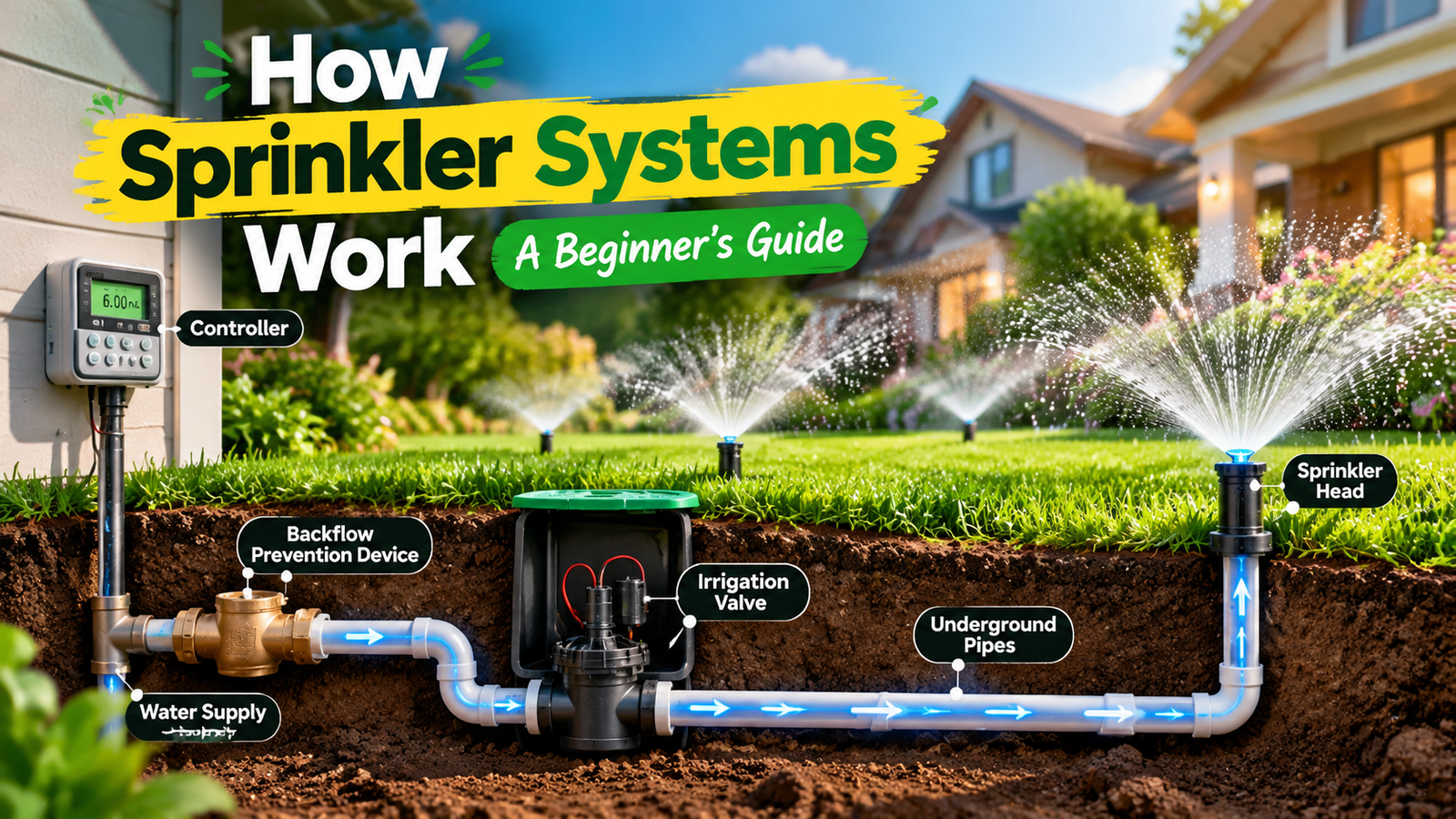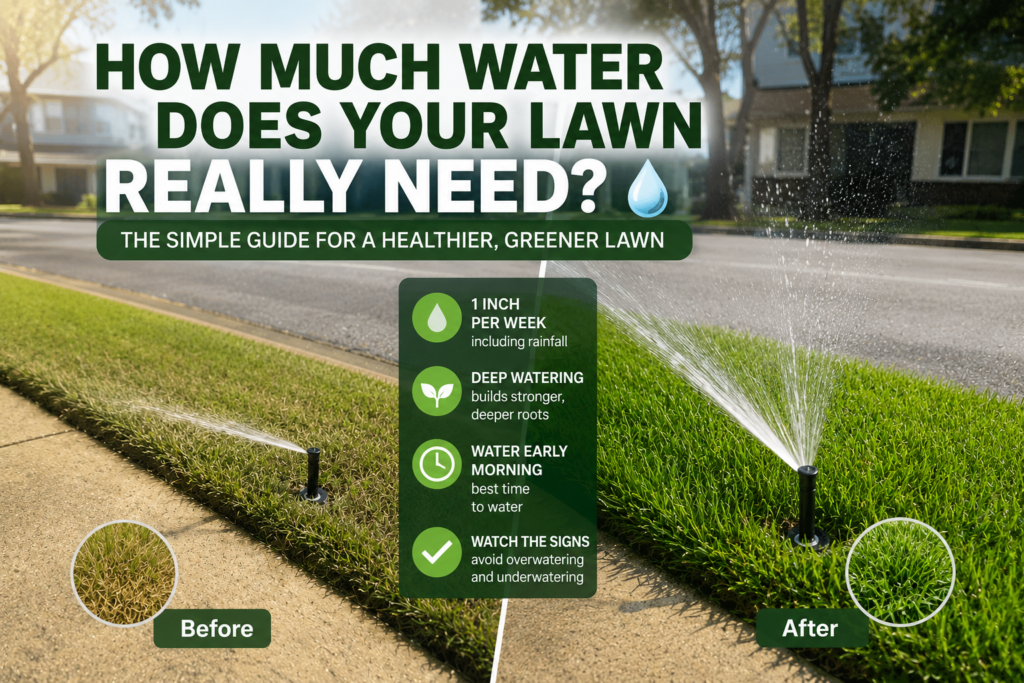
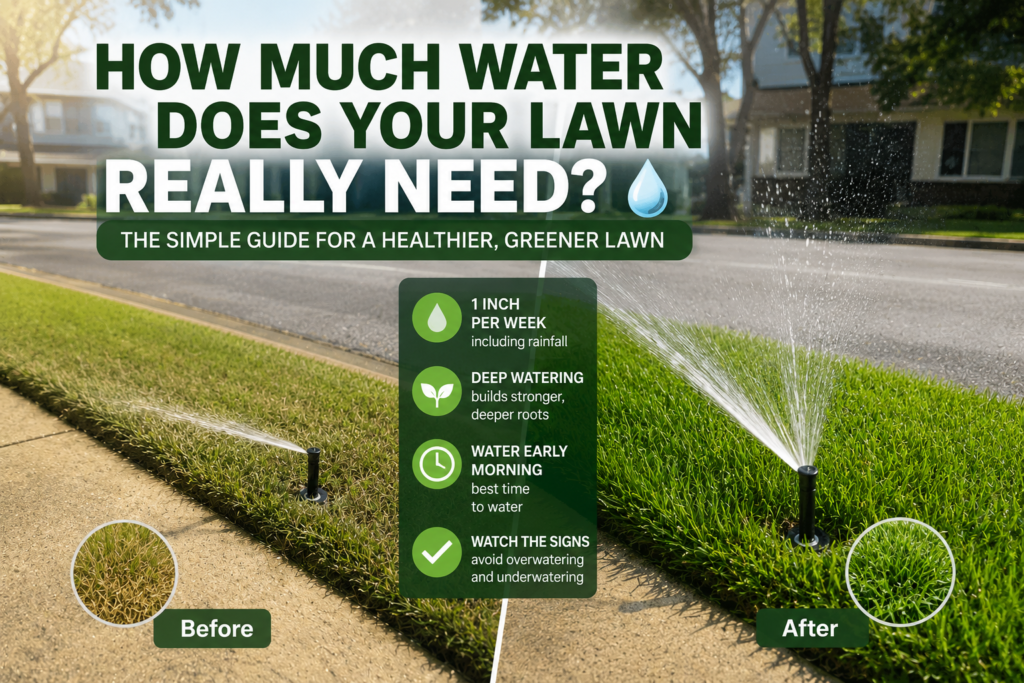
If you’re wondering how much water does your lawn need, most established lawns need approximately 1 inch of water per week, including rainfall. This amount can come from rain, irrigation, or a combination of both. However, your lawn’s actual water requirements depend on grass type, soil conditions, temperature, sunlight, and seasonal rainfall.
Understanding how much water your lawn needs helps prevent underwatering, overwatering, and unnecessary water waste. During rainy weeks, you may not need to run your sprinkler system at all. During hot, dry Florida weather, your lawn may need supplemental irrigation to maintain healthy roots and green grass.
Here’s what to know before you turn on the sprinklers.
Quick takeaways:
- Most lawns need roughly 1 inch of water per week, rain included
- Deep, infrequent watering builds stronger roots than daily light watering
- Early morning is the best time to water in Florida
- Puddling, fungus, and weeds are signs of overwatering, not underwatering
- New sod or seed needs a different watering approach than an established lawn
How Much Water Does Your Lawn Need? The Simple Answer: About 1 Inch Per Week
For most turfgrass species, roughly 1 inch of water per week from rain,irrigation, or a combination of both is enough to keep roots hydrated and grass healthy. That inch doesn’t need to come all at once, and on weeks with good rainfall, you may not need to run your sprinklers at all.
The tricky part is that “1 inch” is a general guideline, not a guarantee. A lawn in full sun on sandy soil in July needs a very different watering approach than a shaded lawn on clay soil in March. That’s why it helps to understand what actually changes your lawn’s water needs.
Why Your Lawn’s Water Needs Are Not Always the Same
A handful of factors determine how much and how often your specific lawn needs water:
- Grass type. Warm-season grasses common in Florida, like St. Augustine, Bahia, and Zoysia, have different drought tolerances and root depths.
- Soil type. Sandy soil (common throughout the Florida Panhandle) drains fast and holds less moisture. Clay soil holds water longer but absorbs it more slowly.
- Weather. Heat, humidity, and wind all affect evapotranspiration how quickly water leaves soil and plants through evaporation and transpiration.
- Season. Grass usually needs more water during active summer growth and less during cooler, dormant months.
- Sun exposure. Lawns in full sun dry out faster than shaded areas.
- Lawn age. New seed or sod has shallow roots and dries out faster than an established lawn.
- Slope and drainage. Sloped yards can lose water to runoff before it soaks in, while low spots may hold too much.
Once you know which apply to your yard, building a watering routine that works becomes much easier than guessing.
How Often Should You Water Your Lawn?
Knowing how much water your lawn needs is only part of the process. You also need to apply that water at the right frequency. Most established lawns benefit from deep, less frequent watering because it encourages stronger root growth and improves drought tolerance.
In Okaloosa County, sandy soil can drain quickly, so monitor your lawn and adjust your watering schedule according to rainfall and soil moisture. Rather than following a rigid schedule, check your grass for signs of water stress and use a rain gauge to measure how much water your yard receives.
A general lawn watering schedule looks something like this:
- Clay soil: 1–2 times per week, since clay retains moisture longer
- Sandy soil: 2–3 times per week in smaller amounts, since sandy soil drains quickly
- Hot Florida summer weather: 2–3 times per week, early morning, adjusted for rainfall
- Cooler or rainy weather: Once a week or less let rainfall do the work
Because much of Okaloosa County sits on sandy soil, local lawns often need more frequent, lighter watering rather than one heavy soak. If sprinklers aren’t distributing water evenly across zones, that’s often a coverage or valve issue covered in our post onwhy a sprinkler zone won’t turn on.
Best Time of Day to Water Your Lawn
Early morning generally between 4 a.m. and 9 a.m. is the best time to water your lawn. At that time, temperatures are cooler and winds are typically calmer, so more water reaches the roots instead of evaporating.
Watering at midday, especially during Florida’s peak summer heat, means much of that water evaporates before it can soak in. Watering late at night is also a problem: grass blades stay wet for hours, creating the damp conditions fungus and lawn disease need to take hold. Early morning strikes the right balance. The EPA’s WaterSense program recommends this same early-morning window for outdoor watering nationwide.
How to Measure 1 Inch of Water
Most homeowners have no idea how much water their sprinklers actually put down in a given amount of time. The tuna can test is a simple, reliable way to find out.
- Place a few shallow, straight-sided cans (a tuna can works great) around different areas of your lawn.
- Run your sprinklers as you normally would.
- Time how long it takes to collect about half an inch of water in the cans.
- Water that same amount roughly twice a week if needed, based on your soil type and the schedules above.
- Adjust up or down depending on rainfall and how your lawn responds.
This test also doubles as a quick system check. Uneven or barely-there readings can point to low pressure somewhere in the system a problem we cover inwhy irrigation water pressure runs low.
Signs Your Lawn Needs More Water
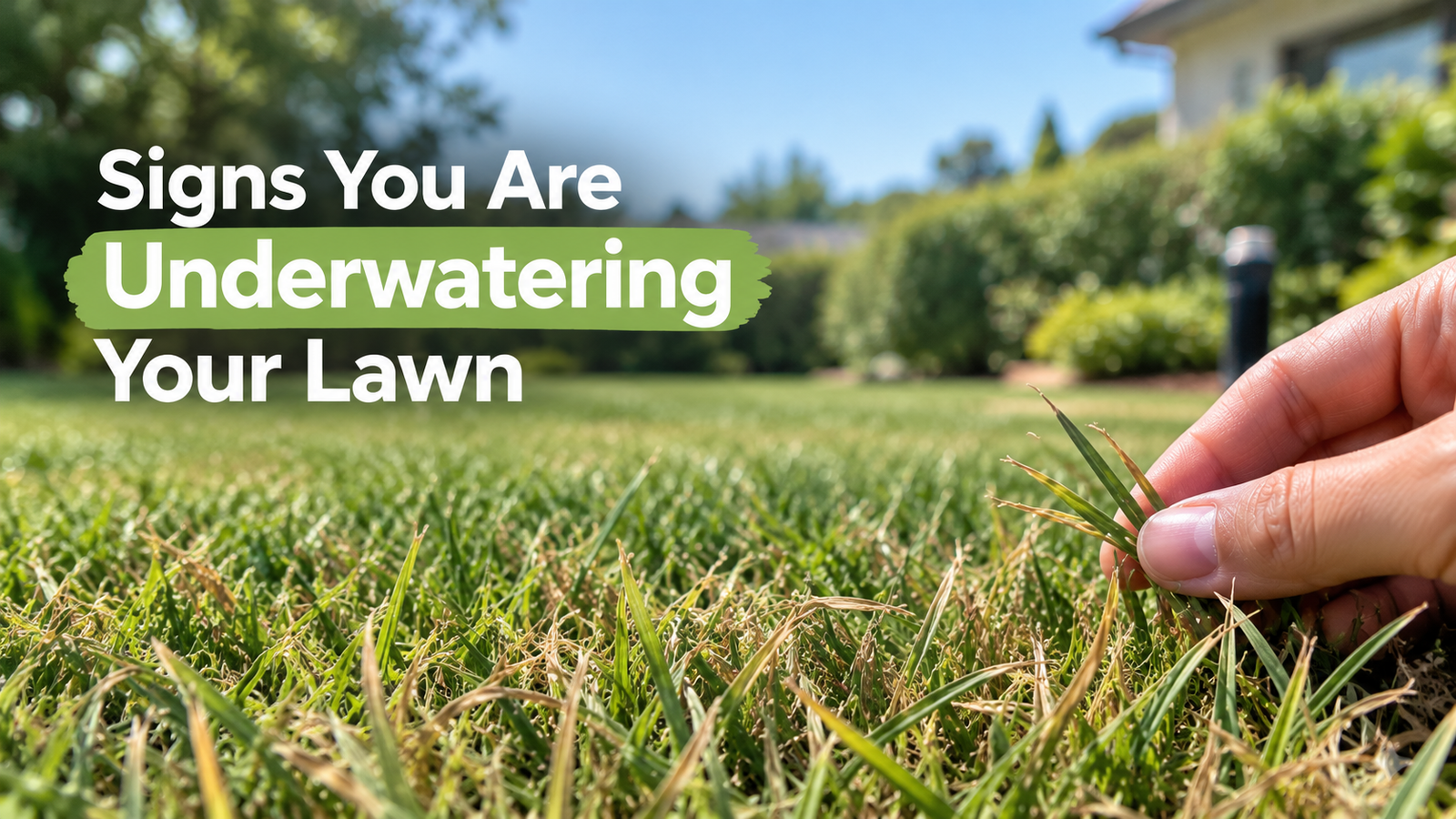
Grass usually tells you when it’s thirsty before real damage sets in. Watch for:
- Grass that looks dull, gray, or slightly bluish-green instead of vibrant green
- Footprints or mower tracks that stay visible instead of springing back
- Blades that curl, fold, or wilt
- Soil that feels dry an inch or two below the surface
- Brown or crispy patches, especially during summer heat stress
If certain patches stay dry no matter how often you water, the issue may not be your schedule a head that isn’t popping up can leave a whole area under-watered, a common cause covered inwhy sprinkler heads stop popping up.
Signs You Are Overwatering Your Lawn
Overwatering causes just as many problems as underwatering. Watch for:
- Puddles or water running off into the driveway or street
- Soil that feels spongy or squishy underfoot
- Mushrooms or visible fungus patches
- A noticeable increase in weeds
- Grass that pulls up easily, revealing weak, shallow roots
- Yellowing grass, even though it’s getting plenty of water
- Needing to mow more often than usual
If you’re seeing several of these signs, cutting back your watering frequency and checking for a stuck or leaking valve is usually the first fix.
New Lawn vs Established Lawn: Different Watering Needs
New sod or freshly seeded lawns need lighter, more frequent watering sometimes daily or twice a day for the first couple of weeks just to keep the top inch of soil consistently moist, since their roots haven’t developed yet.
Established lawns benefit from the deep and infrequent approach described earlier. Once roots are developed, frequent light watering works against your lawn by keeping those roots shallow. If you’ve recently had sod installed, ease into a normal schedule gradually rather than switching all at once.
Smart Lawn Watering Tips to Save Water and Money
A few small adjustments make a real difference in your water bill and lawn health:
- Use a rain gauge to track actual rainfall before deciding to water
- Check the weather forecast before running sprinklers
- Fix broken or misaligned sprinkler heads promptly
- Use a cycle-and-soak approach (short watering cycles with breaks in between) on clay soil or sloped yards to reduce runoff
- Mow at the correct height for your grass type, since taller grass holds moisture better
- Avoid watering sidewalks, driveways, or the street adjust sprinkler heads if needed
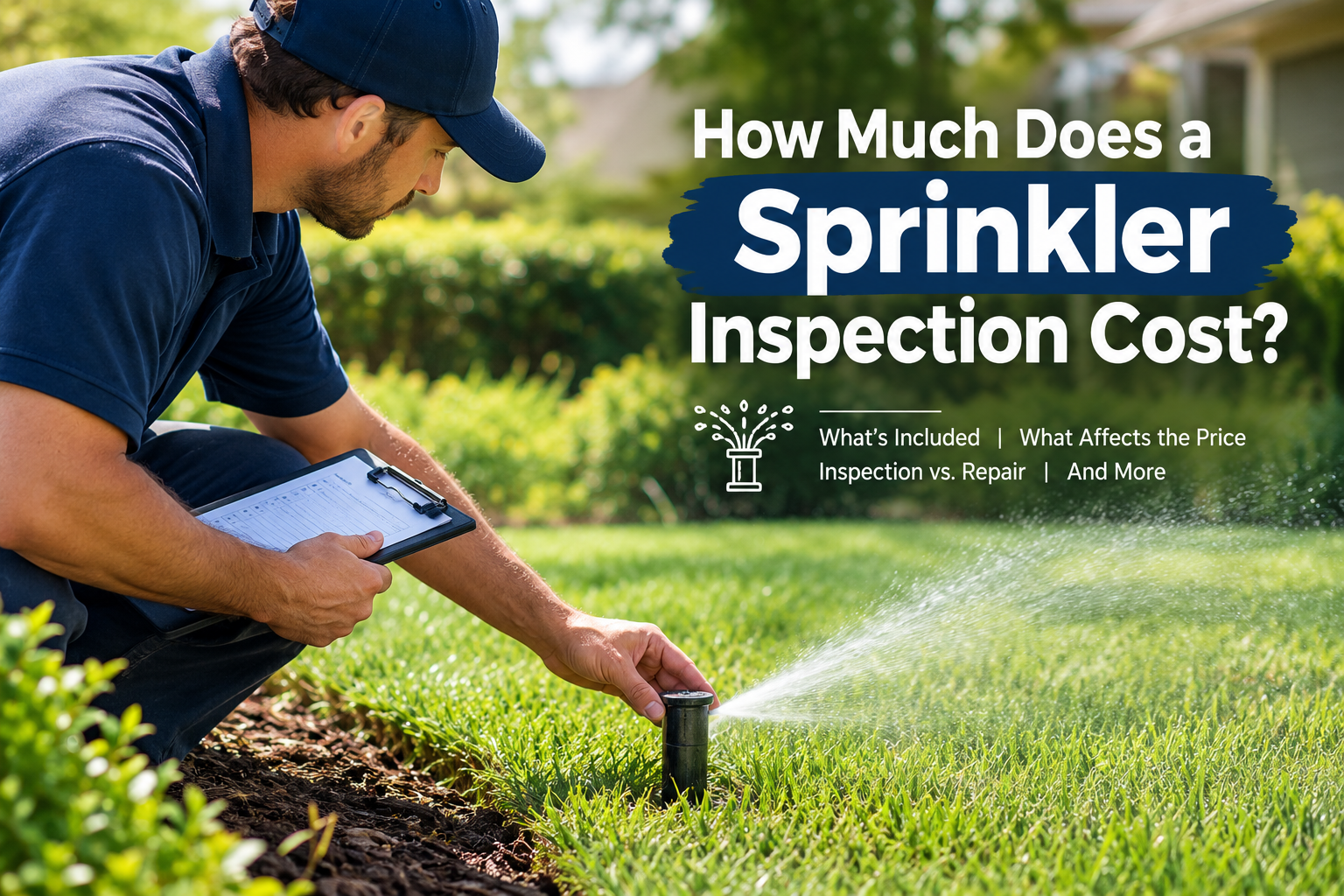
- Schedule a seasonal irrigation inspection to catch leaks or coverage gaps early
Small leaks and misaligned heads are more common than most homeowners realize, and they quietly waste water. Our sprinkler system repair services fix broken heads, leaks, and uneven coverage in existing systems without pushing unnecessary replacements.
When to Call a Lawn Care Professional
Some watering issues are easy to fix on your own. Others uneven coverage, a lawn that won’t stop showing stress, weak system pressure, or a struggling pump are worth a professional look.
At Summit Outdoors Irrigation, we help homeowners across Okaloosa County includingFort Walton Beach,Niceville,Destin, andShalimar with diagnostics, sprinkler repair, and pump replacement when a system truly needs it. If a failing pump is behind your watering problems, ourirrigation pump installation and replacement service can help. See examples of past work on ourportfolio page.
Final Answer: Your Lawn Needs Enough Water to Reach the Roots
So, how much water does your lawn need in the end? The real goal isn’t hitting an exact number every week it’s giving your lawn enough water, applied the right way, to reach and support healthy root growth. For most Florida lawns, that means aiming for around 1 inch per week, watering deeply and infrequently, doing it early in the morning, and paying attention to what your grass is telling you.
Need help building the right watering schedule for your lawn? Contact Summit Outdoors Irrigation for professional irrigation and sprinkler repair support in Okaloosa, FL, or browse our blog for more irrigation troubleshooting guides.
Frequently Asked Questions
Is watering my lawn every day bad? Yes, in most cases. Daily light watering encourages shallow roots and can make your lawn more vulnerable to heat stress and disease. Deep, less frequent watering is generally healthier for established lawns.
How long should I run my sprinklers? It depends on your sprinkler type and water pressure, which is why the tuna can test is useful it shows you exactly how long it takes your system to apply half an inch of water in your yard.
Should I water my lawn after rain? Usually not right away. Check how much rain actually fell (a rain gauge helps) and factor that into your weekly total before running your sprinklers again.
Can too much water kill grass? Yes. Overwatering can suffocate roots, encourage fungus and disease, and weaken your lawn’s root system, which can ultimately lead to dead or dying patches.
How do I know if my lawn needs water? Look for dull or bluish-green color, footprints that stay visible, curling blades, or dry soil an inch below the surface. These are reliable early signs that it’s time to water.