Why Is One Sprinkler Zone Not Turning On?
Why won’t my sprinkler zone turn on? If one section of your lawn stays dry while the other sprinkler zones work normally, the problem may be caused by faulty wiring, a damaged valve solenoid, a clogged valve diaphragm, or incorrect controller settings. Understanding these common causes can help you identify the issue and restore your irrigation system.
If your system continues having irrigation problems, professional sprinkler repair and irrigation services can help identify deeper electrical or valve-related issues before they damage your lawn.
It’s a frustrating moment for many homeowners: you expect your lawn to be watered, but one section of your yard remains dry.
Full diagnosis guide: Common Sprinkler Problems: A Complete Diagnosis Guide
Irrigation overview: Irrigation
If your system continues having irrigation problems, professional sprinkler repair and irrigation services can help identify deeper electrical or valve-related issues before they damage your lawn.
Related guide: Why Won’t My Sprinkler Zone Turn On? Common Reasons Explained
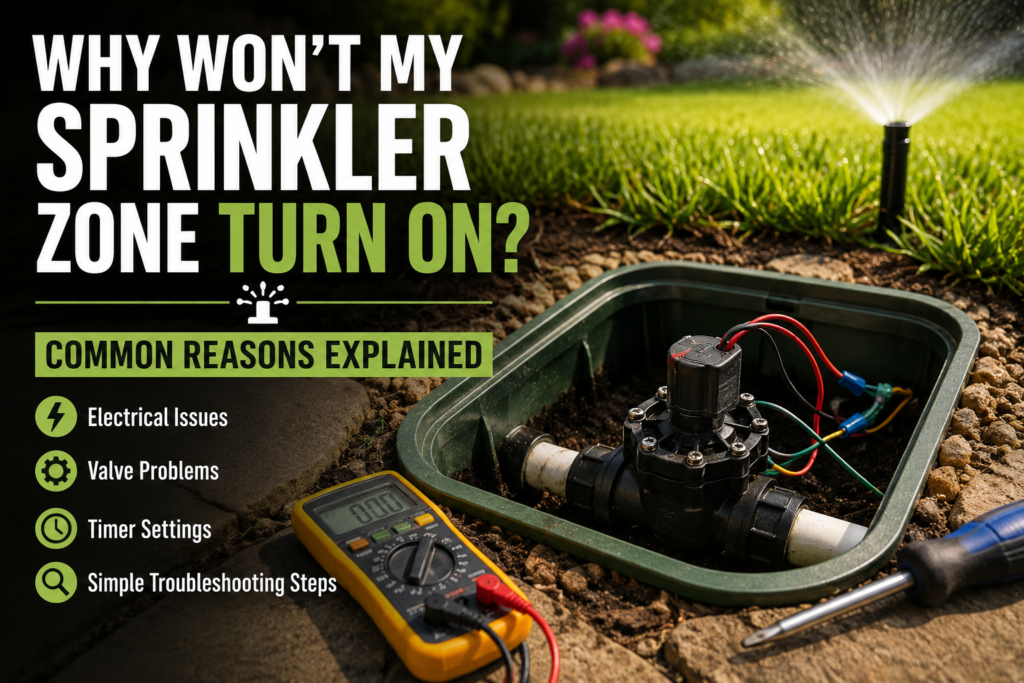
Why Won’t My Sprinkler Zone Turn On?
Key Reasons Why a Sprinkler Zone Won’t Turn On
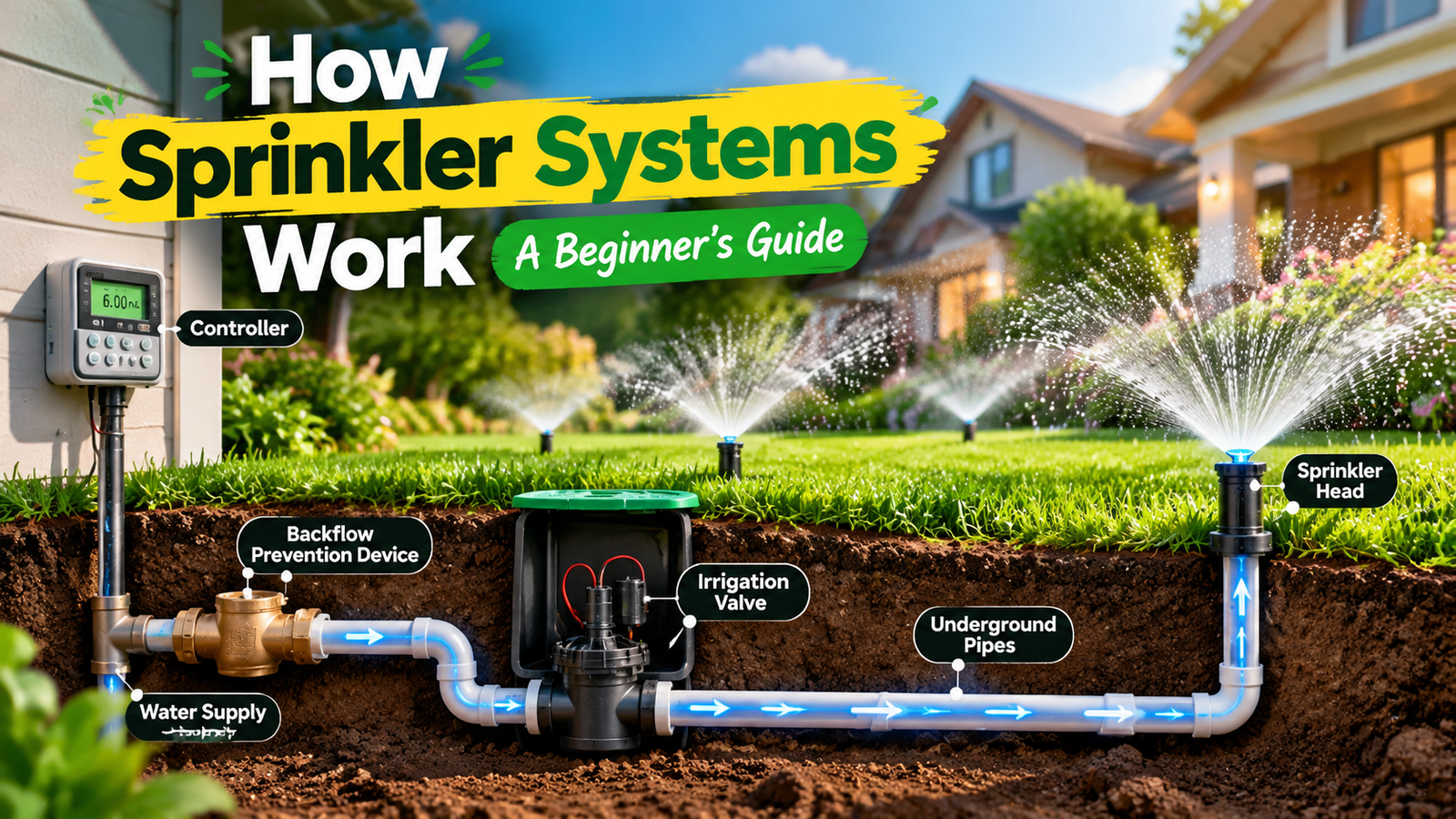
If one sprinkler zone isn’t working, the problem usually lies with a component specific to that zone. The most frequent culprits are electrical issues or mechanical blockages. A signal must travel from your controller, through the wiring, to the valve’s solenoid, which then opens the valve to release water. A failure at any point in this chain can stop the zone from activating.
Common issues include a faulty solenoid, broken wiring, a stuck valve, or an incorrect setting on the timer. While it might seem complex, identifying the source of the problem is often a process of elimination. The first step is to figure out whether the problem is electrical or mechanical. Let’s look at some of the most common issues you might encounter.
Water pressure issue guide: Why Is My Water Pressure Low in My Irrigation System? Solutions
Common sprinkler issues: Common Sprinkler Problems: How to Diagnose Them Easily
Beginner irrigation care: Essential Lawn Care and Watering Education for Beginners
Common Electrical Issues (Solenoid, Wiring, Controller)
Your irrigation system relies on a low-voltage electrical current to function. A problem with the solenoid, wiring, or controller can prevent a sprinkler zone from turning on. The solenoid is an electromagnet that opens the valve; if it fails, the valve stays shut. You can test a solenoid with a multimeter to see if it’s receiving the correct electrical reading.
According to Wikipedia’s irrigation sprinkler article, modern irrigation systems depend on automatic valves and controllers to distribute water efficiently across different lawn zones.
Wiring issues are another frequent cause. Can wiring issues cause a sprinkler zone to stop turning on? Absolutely. Wires can be damaged during yard work, corrode over time, or simply come loose from their connections. Inspect the wiring at both the controller and the valve box for any visible damage, such as cuts or worn insulation.
If you notice repeated electrical failures or inconsistent watering schedules, it may be time to schedule a professional irrigation system inspection to prevent long-term landscape damage.
Finally, the controller itself might be the source of the problem. A programming error is a simple fix.
- Check if the zone’s run time is set to zero.
- See if a rain delay or seasonal adjustment is active.
- Ensure the zone hasn’t been accidentally disabled in the settings.
Controller-based failures: Irrigation Controller
Zone failure explanation: Why Won’t My Sprinkler Zone Turn On? Common Reasons Explained
Wiring/system troubleshooting: How to Troubleshoot and Fix a Sprinkler Zone That Isn’t Working
If you notice repeated electrical failures, it may be time to schedule a professional irrigation system inspection.
Valve Problems and Mechanical Failures
Sometimes, the electrical components work perfectly, but a mechanical failure within the valve prevents water from flowing. The diaphragm, a rubber seal inside the valve, can get stuck or clogged with dirt, debris, or mineral buildup. Is a faulty solenoid a possible reason your sprinkler zone won’t start? Yes, but if you hear the solenoid click when you activate the zone, the problem is likely mechanical.
When the solenoid clicks but no water flows, the issue is often a stuck diaphragm. To fix this, you’ll need to turn off the water, open the valve, and clean the diaphragm. While you have it open, inspect it for any tears or wear that might require a replacement.
Learning more about how an automatic irrigation system works can help homeowners better understand how valves, water pressure, and controllers all work together.
Finding the right valve box can sometimes be a challenge, but it’s a necessary step for these types of mechanical failures. If the issue keeps happening, working with an experienced sprinkler maintenance company can save time and prevent costly repairs later.
Here’s a quick guide to diagnosing valve-related issues:
| Symptom | Likely Cause | Solution |
|---|---|---|
| Solenoid clicks, but no water flows | Stuck or clogged diaphragm | Open the valve and clean or replace the diaphragm. |
| Weak or intermittent water flow | Partially open valve or debris | Clean the valve and check for obstructions. |
| No clicking sound at the valve | Faulty solenoid or wiring issue | Test solenoid with a multimeter and inspect wiring. |
Sprinkler diagnosis guide: Common Sprinkler Problems: A Complete Diagnosis Guide
Sprinkler maintenance service: Sprinkler System Repair Services in Okaloosa, FL
Irrigation system basics: Irrigation
Troubleshooting Steps for a Non-Responsive Sprinkler Zone
When you notice a dry spot in your lawn, it’s time for some troubleshooting. For homeowners, the process of figuring out why a sprinkler zone won’t respond can be straightforward. The first thing you should check is the controller or timer. Try to run the non-responsive zone manually from the controller. This simple step helps rule out any programming issues with your automatic schedule.
If the manual test doesn’t work, your next stop is the valve box. Listen for a distinct clicking sound from the valve when you activate the zone. A click indicates the electrical signal is reaching the solenoid, pointing to a probable mechanical issue. No click suggests an electrical problem. Having a multimeter handy can help you confirm if power is reaching the valve.
Step-by-step troubleshooting: How to Troubleshoot and Fix a Sprinkler Zone That Isn’t Working
Signs your system needs fixing: Top 10 Signs Your Fort Walton Beach Sprinkler Needs Fixing
Testing Valves, Solenoids, and Timer Settings
To pinpoint the exact cause, you’ll need to test a few key components. Start with the timer settings. What steps should you take if your sprinkler zone isn’t activating on the timer? First, double-check that the zone is enabled and has a run time greater than zero. Also, make sure any “rain delay” or “seasonal adjust” features are not preventing the zone from running.
If the timer settings are correct, move on to the valve and solenoid. One way to test if your sprinkler valve is the reason a zone isn’t turning on is to listen for the solenoid’s click. If you don’t hear one, the solenoid may be faulty. You can test it with a multimeter; a healthy solenoid should have a resistance reading between 20 and 60 ohms. A reading outside this range means it likely needs replacement.
Water pressure problems: Why Is My Water Pressure Low in My Irrigation System? Solutions
Zone repair guide: Why Won’t My Sprinkler Zone Turn On? Common Reasons Explained
Destin repair service: Sprinkler Repair Service in Destin
Here are some quick testing steps:
- Activate the zone manually from the controller.
- Go to the valve box and listen for a clicking sound.
- If there’s no click, test the solenoid’s resistance with a multimeter.
- If it clicks but there’s no water, inspect the valve’s diaphragm for debris or damage.
Conclusion
In summary, understanding why your sprinkler zone won’t turn on can save you time, frustration, and money. Whether it’s due to electrical issues, valve malfunctions, or simple troubleshooting oversights, identifying the root cause is essential for restoring your system’s functionality. Regular maintenance and checks can help prevent these problems from arising in the first place. If you find yourself needing assistance or further guidance, don’t hesitate to reach out to a professional. Your lush, green lawn deserves the best care!
Main irrigation service: Summit Outdoor Irrigation
Fort Walton Beach service: Irrigation Sprinkler Repair in Fort Walton Beach, FL
Niceville service: Sprinkler Repair in Niceville
Pump installation: Irrigation Pump Installation in Okaloosa, FL
Water saving tips: Water-Saving Sprinkler Tips for Niceville Homeowners
Wikipedia irrigation reference: Irrigation
Frequently Asked Questions
Can wiring issues prevent a sprinkler zone from turning on?
Yes, wiring issues are a very common reason for a sprinkler zone to fail. A broken wire, corroded connection, or damaged insulation can prevent the electrical signal from the controller from reaching the valve. You can visually inspect the wiring for damage or use a multimeter to check for continuity.
How do I check if the sprinkler valve is the issue?
First, activate the sprinkler zone and listen for a clicking sound at the valve box. If you hear a click but no water flows, the problem is likely mechanical, such as a clogged diaphragm. If there is no click, the issue is probably electrical. This helps you narrow down the source of your irrigation problem.
When should I call a professional for sprinkler system repairs?
While many homeowners can handle simple fixes, it’s best to call a professional for complex sprinkler system repairs. If you’re dealing with issues affecting multiple zones, intermittent electrical problems, or if you can’t locate your valve box, an expert can diagnose and resolve the problem safely and efficiently.