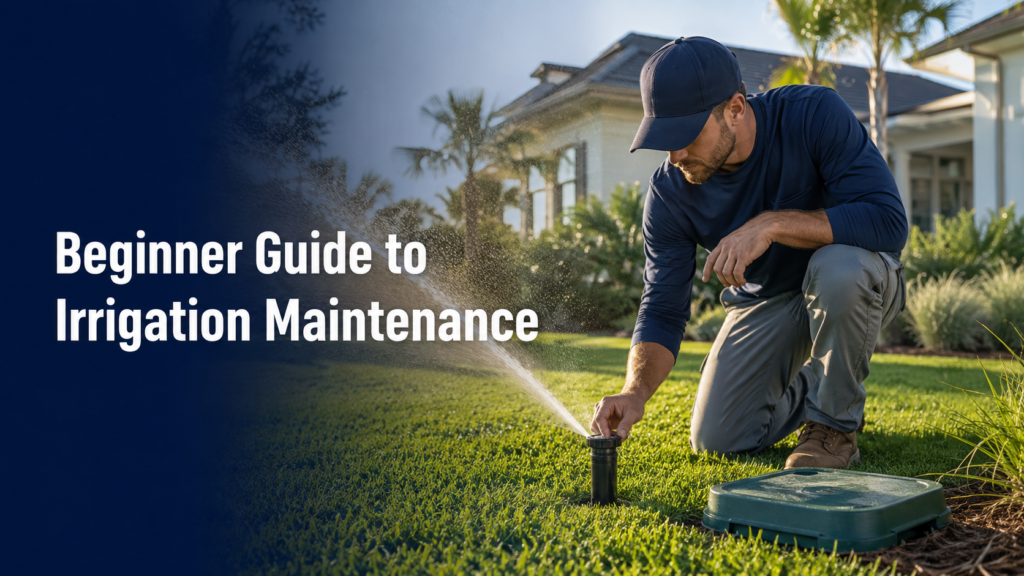
If you’ve ever walked outside to find one corner of your lawn turning brown while the rest looks fine, you already know why irrigation maintenance matters. A sprinkler system that runs on autopilot for months without a check-in can develop small problems that quietly turn into big ones. The good news is that irrigation maintenance doesn’t require special training to get started. This guide walks you through what to look for, how often to check your system, and which tasks are safe to handle yourself versus when it’s time to bring in help whether you’re a new homeowner in Fort Walton Beach or you’ve simply never paid much attention to the system that came with your property.
What Is Irrigation Maintenance?
Irrigation maintenance is the ongoing process of checking, cleaning, and adjusting your sprinkler system so it keeps working the way it’s supposed to clearing debris from heads, watching for leaks, adjusting the schedule with the seasons, and catching small issues before they become bigger repairs.
It’s different from simply waiting until something breaks. A system that only gets attention after a zone fails or a pipe bursts has usually already wasted water and caused some lawn damage along the way. Regular maintenance is about staying ahead of those problems instead of reacting to them.
Why Regular Irrigation Maintenance Matters
A little attention now can save you a lot of frustration later. Consistent irrigation maintenance supports:
- Healthier grass and landscaping through even watering instead of dry patches or soggy spots
- Lower risk of water waste from a cracked pipe or stuck valve running unnoticed
- More even watering thanks to clean nozzles and properly aimed heads
- Fewer unexpected repairs, since small leaks or worn parts are easier to fix early
- Longer system life for components that are checked and cleaned regularly
- Better performance during warm, dry stretches, which is when Northwest Florida systems often work hardest and small issues show up fastest
Know the Main Parts of Your Irrigation System
Before you can maintain a system, it helps to know what you’re looking at. Most residential setups share the same basic components.
Controller or Timer
The “brain” of your system. It tells each zone when to turn on, how long to run, and how often usually mounted in a garage, utility area, or weatherproof outdoor box.
Irrigation Zones
Your yard is likely divided into zones, each covering a specific area so sunny spots and shady spots can be watered on different schedules.
Valves
Valves control water flow into each zone. A valve that won’t open or close properly can leave a zone dry or running when it shouldn’t be.
Pipes and Fittings
Pipes carry water to each zone; fittings connect sections together. Most of this runs underground, so problems here aren’t always visible right away.
Sprinkler Heads and Nozzles
The parts you actually see in the yard. Heads pop up or stay fixed depending on the type, while nozzles control the spray pattern usually where beginners spot the most obvious issues.
Rain or Moisture Sensors
Many systems include a sensor that pauses irrigation after enough rainfall, helping prevent overwatering during Florida’s wetter months.
Irrigation Pump, When Applicable
Properties drawing water from a well or pond often rely on a pump to build the pressure needed to run the system. Not every property has one, but if yours does, it’s worth knowing where it sits and what normal operation sounds like.
Beginner Irrigation Maintenance Checklist
Work through this a section at a time rather than trying to check everything in one visit.
1. Run every irrigation zone. Turn each zone on and watch a full cycle. Steady flow and even coverage are normal; weak spray, no water, or pooling are warning signs. Safe for a beginner.
2. Look for broken or tilted sprinkler heads. Heads should stand upright with a clean spray pattern. Leaning, cracked, or geyser-like spray needs attention. Safe to spot visually.
3. Clean clogged nozzles. Dirt and mineral buildup often cause weak or partial spray patterns. Many nozzles can be gently removed and rinsed by a homeowner avoid forcing stuck parts.
4. Check for leaks and soggy areas. Look for wet or spongy ground near heads, valve boxes, or pipe runs, especially when the system is off. Safe to observe, but repairing an underground leak is not a beginner task.
5. Watch for dry spots and uneven coverage. Persistent dry patches next to healthy grass usually point to a clogged head, misalignment, or a pressure issue in that zone. Safe to track over time.
6. Inspect water pressure. Weak, misty spray across several heads in one zone can point to causes of low irrigation water pressure, like a partially closed valve or a leak elsewhere in the line. Observing is safe; diagnosing the cause often isn’t.
7. Adjust spray direction. Heads drift out of position from mowing, foot traffic, or settling soil. Most have a small screw or dial for redirecting spray away from hardscape. Safe and simple for most homeowners.
8. Review the watering schedule. Check what days and times each zone runs. A schedule that hasn’t changed in months is often watering too much or too little for the season. Safe and worth doing regularly.
9. Test the rain sensor. Confirm it’s clean and not stuck open or shut. It should pause the system after meaningful rainfall. Testing is safe; wiring repairs are not.
10. Check the controller for errors. Look for error messages, a blinking light, or a reset schedule, which can signal a power interruption or wiring issue. Reviewing the display is safe; opening internal wiring is not.
11. Examine visible pump components without opening electrical equipment. Check for leaks, unusual noise, or an overly hot housing from the outside. Never open electrical panels or service internal pump parts yourself.
12. Clear grass and soil from sprinkler heads. Overgrown grass or settled soil can block a head from popping up or spraying correctly. Clearing debris away from the head is safe for beginners.
How Often Should You Inspect Your Irrigation System?
There’s no single schedule that fits every property, but a general rhythm works for most homeowners:
- Monthly visual check run each zone and walk the yard for obvious problems
- Seasonal controller adjustment as temperatures and rainfall shift
- Inspection after landscaping or construction work, which can damage pipes or shift heads without you realizing it
- Inspection after storms, freezing weather, or noticeable pressure changes, common triggers for irrigation issues locally
- Annual professional evaluation, when appropriate, to catch issues a walk-through might miss
Property size, plant types, soil conditions, and local watering restrictions can all affect how often your system needs attention, so treat this as a starting point rather than a fixed rule.
Common Irrigation Problems Beginners Can Spot
Broken Sprinkler Heads
Cracked casings, missing caps, or heads that won’t retract are usually easy to spot once you know what to look for.
Clogged Nozzles
A nozzle spraying only part of its pattern, or nothing at all, is often clogged with debris or mineral deposits.
Leaking Valves or Pipes
Unexplained wet spots, hissing near a valve box, or a higher-than-usual water bill can all point to a leak.
Low Water Pressure
Weak spray from multiple heads in the same zone usually means low pressure, though the underlying cause can vary.
Sprinkler Heads That Do Not Pop Up
This common issue can stem from debris blocking the head, a broken spring, or low pressure. See this explanation of why sprinkler heads are not popping up for more detail.
One Irrigation Zone That Will Not Turn On
When a single zone won’t activate while others work fine, it’s often a valve or wiring issue for that zone specifically. This guide on why a sprinkler zone will not turn on covers common causes.
Uneven Watering
Patchy coverage usually traces back to misaligned heads, clogged nozzles, or a zone that’s undersized for the area it covers.
Controller or Timer Problems
A controller that resets itself, loses programming, or shows error codes may have a power issue or a wiring fault.
Pump Performance Problems
Unusual noise, inconsistent pressure, or a pump that cycles on and off often signals a developing issue worth having evaluated.
Simple Maintenance Tasks You Can Do Yourself
A handful of tasks are genuinely safe and practical for most homeowners:
- Cleaning debris out of nozzles and sprinkler heads
- Clearing grass, mulch, or soil blocking a head
- Adjusting spray direction on heads with an accessible screw
- Checking for obvious surface leaks or soggy areas
- Updating your controller’s watering schedule for the season
- Replacing a broken head with a matching part, if you’re comfortable doing so
None of this requires special tools or licensing just patience and a willingness to get down at ground level.
Irrigation Work You Should Leave to a Professional
Some problems go beyond what a homeowner should attempt. Consider calling a professional for underground pipe leaks, electrical or controller wiring problems, repeated valve failures, serious pressure loss, pump diagnosis or replacement, multiple zones that won’t activate, or any issue that continues after basic checks.
Safety note: Never work on live electrical wiring, pressurized components, underground utility lines, or the internal parts of an irrigation pump. These tasks carry real risk of injury and can cause further damage if handled incorrectly. When in doubt, it’s worth reaching out for sprinkler system repair services rather than guessing.
Seasonal Irrigation Maintenance Tips for Florida Properties
Northwest Florida’s weather shifts quite a bit throughout the year, and your irrigation system should shift with it.
- Adjust watering schedules as weather changes a schedule built for a hot, dry stretch will likely overwater once cooler or wetter weather arrives
- Watch for heavy rainfall and overwatering. If your rain sensor isn’t working, your system may keep watering right on top of what a summer storm already provided
- Check the system after storms, since wind, flooding, and debris can damage heads, shift pipes, or trip electrical components
- Monitor performance during dry stretches, which put more demand on the system and tend to expose weak spots
- Follow current local watering restrictions, which can change from year to year check with your local water utility or water management district for the latest rules
If you’re managing a property anywhere in Okaloosa County, Florida including Fort Walton Beach, Niceville, Destin, or Crestview these seasonal shifts are worth building into your routine. According to the EPA’s WaterSense program, a lot of water is wasted by poorly designed and neglected sprinkler systems that spray sidewalks, driveways, and streets, and inspecting your irrigation system monthly can help catch that waste early.
Mistakes to Avoid
Even well-intentioned homeowners run into a few common missteps:
- Using the same schedule all year, which almost always leads to over- or under-watering at some point
- Ignoring small leaks, which rarely stay small and tend to waste more water the longer they’re left alone
- Mowing over sprinkler heads, one of the most common causes of broken heads
- Increasing runtime to compensate for poor coverage, which wastes water without fixing the underlying problem
- Replacing parts before diagnosing the cause, which often means the same problem returns
- Attempting unsafe electrical or pump repairs, which risks injury and further damage
When to Schedule an Irrigation Inspection
A few signs point to bringing in a professional: pressure that’s dropped noticeably and doesn’t improve, a zone that won’t turn on after checking the valve and controller, wet ground away from any head, a water bill that’s climbed without explanation, a controller stuck on repeated errors, or a system that hasn’t had a professional evaluation in some time.
If any of these sound familiar, it may be time to schedule an irrigation inspection rather than continuing to troubleshoot on your own.
Final Thoughts
Irrigation maintenance isn’t about becoming an expert overnight it’s about building a habit of checking your system regularly, catching small problems early, and knowing where your comfort level ends. A little consistency goes a long way toward keeping your lawn healthy and your water use in check through Northwest Florida’s warm summers and occasional storms.
Frequently Asked Questions
How often should an irrigation system be serviced? Most homeowners benefit from a monthly visual check paired with seasonal adjustments to the watering schedule. An annual professional evaluation can catch issues that aren’t obvious during a quick walk-through, though the right frequency depends on your specific property and system age.
How can I tell if my sprinkler system has a leak? Look for soggy ground or pooling water away from where sprinklers are actively spraying, unusually high water bills, or a hissing sound near valve boxes. Leaks aren’t always visible right away, especially underground ones, so unexplained changes are worth investigating.
Can I maintain my irrigation system myself? Yes, many basic tasks like cleaning nozzles, clearing debris, adjusting spray direction, and updating your watering schedule are safe for homeowners to handle. More complex issues involving wiring, underground pipes, or pumps are best left to a professional.
Why are some areas of my lawn still dry? Dry spots often trace back to clogged or misaligned sprinkler heads, low pressure reaching a particular zone, or coverage gaps in the system’s original design. Comparing dry areas to nearby healthy grass can help narrow down the cause.
Does an irrigation controller need seasonal adjustment? Yes. Watering needs change with temperature and rainfall, so a schedule that works well in summer is often too much for cooler or wetter months. Reviewing and adjusting your controller each season helps avoid over- or under-watering.
When should an irrigation pump be replaced? Signs like inconsistent pressure, unusual noise, frequent cycling, or visible leaks around the pump housing can indicate it’s time for an evaluation. Since pump issues can vary widely by equipment and property setup, a professional assessment is the most reliable way to know whether repair or irrigation pump replacement makes more sense.
How long does an irrigation inspection take? This varies based on system size, number of zones, and what issues are found, so timing can differ from one property to the next. A technician can give you a better estimate once they know more about your specific setup.
If your sprinkler system needs more than a basic check-up, Summit Outdoors helps homeowners throughout Okaloosa County diagnose and repair existing irrigation systems, from worn-out sprinkler heads to pressure and valve issues. Call 850-461-2480 or visit our contact page to request a free repair estimate.