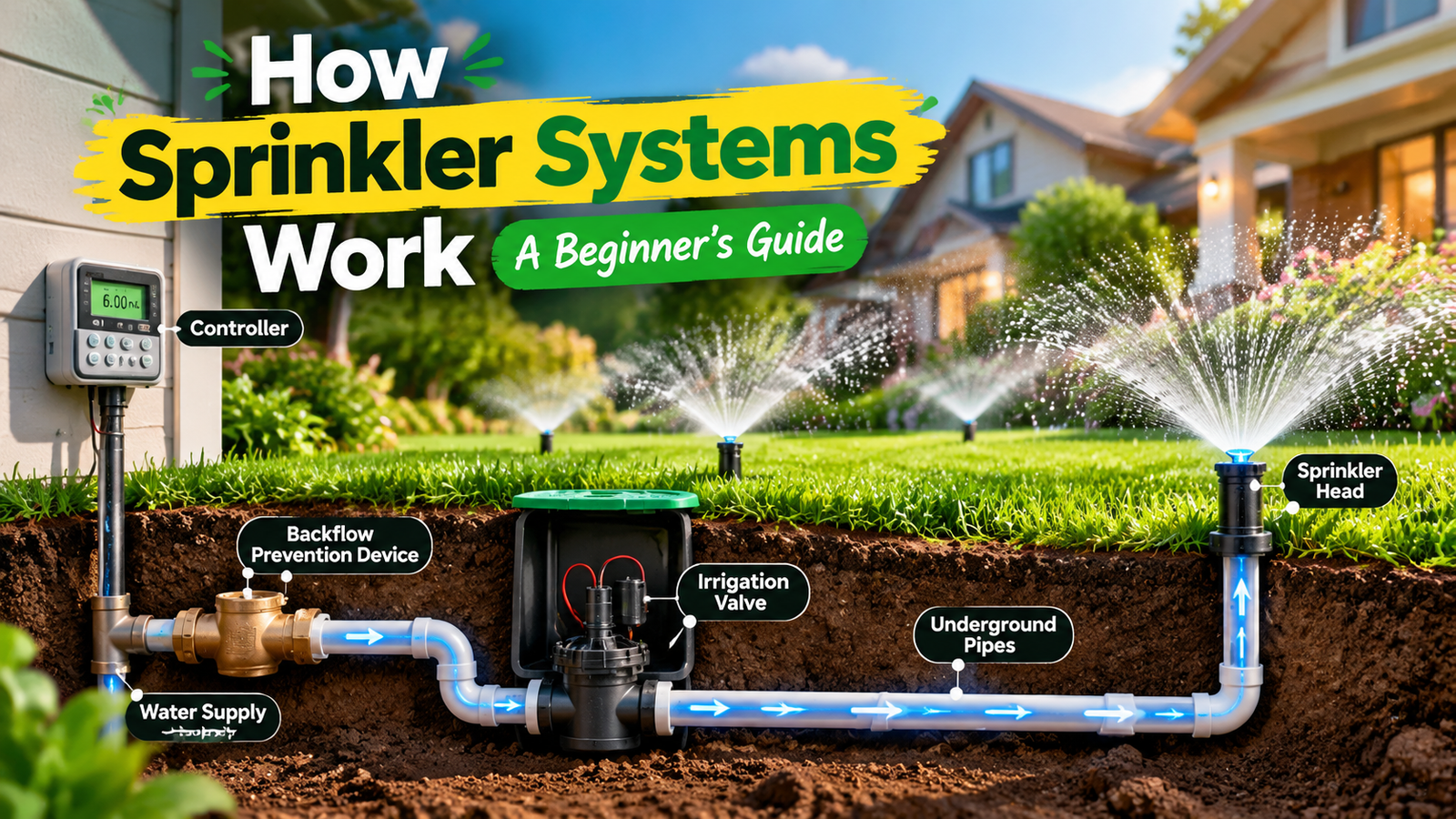
Understanding how sprinkler systems work starts with three basic components: a controller, zone valves, and sprinkler heads. The controller activates each watering zone, the valves regulate water flow, and the sprinkler heads distribute water across your lawn. When these components work together correctly, an irrigation system helps maintain healthy grass while using water efficiently.
How Sprinkler Systems Work: Step-by-Step
To understand how sprinkler systems work, it helps to follow the process from the irrigation controller to the sprinkler heads. The controller starts a watering cycle, opens the appropriate zone valve, and allows water to flow through the pipes. The sprinkler heads then distribute water across the designated lawn area. Once the scheduled watering time ends, the valve closes and the system moves to the next zone or stops.
What Is a Lawn Sprinkler System?
A lawn sprinkler system is a way of delivering water to turf and plants in a controlled pattern, so you are not dragging a hose around the yard. Water is pushed through pipes under pressure and released through heads that spread it over a set area.
Systems fall into two broad groups. A manual system is something like a hose-end sprinkler: you connect it, turn on the tap, move it, and remember to turn it off. An automatic in-ground system keeps its pipes and valves underground and uses a controller to open and close them on a schedule. This guide is about automatic in-ground systems, because that is what most homeowners are trying to understand.
Why homeowners choose automatic systems
The appeal is consistency and control. A timer does not forget, and separate zones let you water a shaded flower bed differently from a sunny lawn. You also get your time back, since there are no hoses to drag or sprinklers to move.
The trade-off is that an automatic system can waste water quietly. A broken head or a schedule nobody has changed in months keeps running whether or not anyone is watching. The EPA’s Sprinkler Spruce-Up page notes that homes with clock-timer-controlled irrigation systems use about 50 percent more water outdoors than homes without irrigation systems. Automation helps only when the system is set up well and checked from time to time.
Where the parts usually sit
Layouts differ, but the pieces tend to turn up in familiar places. The controller is often mounted in a garage, utility room or on an exterior wall. The valves sit together in one or more in-ground boxes with lids. The backflow device is usually near the point where the system connects to the water supply. The pipes are buried, and only the heads show. Knowing roughly where each part lives makes it much easier to describe a problem to a technician, or to find the right place to look first.
What Are the Main Parts of a Sprinkler System?
Every installation is a little different, and not every system has every part listed here. A system fed by a well, for example, usually includes a pump, and plenty of older systems have no sensors at all. Most automatic systems include the following.
- Water supply. This is the municipal line or well that feeds the system. Everything downstream depends on the flow and pressure it can provide.
- Backflow prevention device. Where local plumbing codes require one, this device sits near the supply connection and stops irrigation water from flowing backward into drinking water.
- Controller or timer. The controller is the brain. It stores your schedule and sends a low-voltage electrical signal to the valves. It does not move water itself.
- Irrigation valves. Each zone has a valve, usually an electrically operated one. When the controller sends its signal, the valve opens and lets pressurized water into that zone’s pipes.
- Underground pipes. A main line carries water to the valves, and smaller lateral lines carry it from each valve to the heads.
- Sprinkler heads. These are the visible parts. Water pressure pushes a pop-up head out of the ground, and it sprays until the valve closes.
- Rain sensors and other weather-based controls. These optional devices keep the system from watering when it does not need to. More on those below.
The parts do different jobs, and it helps not to mix them up. The controller decides when. The valve decides where. The pipes carry the water, and the heads decide how it lands on the lawn.
How a zone valve actually opens
Most residential zone valves are electric diaphragm valves. In general terms, water pressure holds a flexible diaphragm closed inside the valve. When the controller sends its signal, a small solenoid on top of the valve relieves that pressure, and the pressure in the line then lifts the diaphragm so water can pass. When the signal stops, pressure builds again and the valve closes.
This is why valves can fail in two directions. Debris or a worn diaphragm can stop a valve from opening fully, or stop it from closing, and a weak solenoid can stop it from opening at all. Designs vary between manufacturers, so treat this as the general idea, not a repair guide.
How the controller reaches the valves
Wires run underground from the controller to each valve. There is typically one wire per zone, plus a shared common wire. To start a zone, the controller sends low-voltage power down that zone’s wire, which energizes the solenoid on its valve.
Because each zone has its own wire, a cut wire, a corroded splice or a lightning surge can knock out a single zone while the others keep running. That is one reason wiring is a frequent suspect when one zone will not turn on.
How Does a Sprinkler System Work Step by Step?
This is the usual sequence for an automatic system, though details vary by equipment.
- The controller follows its schedule. At the programmed start time, the controller begins its watering cycle.
- The controller activates one valve. It sends an electrical signal to the valve for the first zone in the program.
- The valve opens. Pressurized water moves from the main line through the valve and into that zone’s lateral pipes.
- Water reaches the heads in that zone. The pressure lifts each pop-up head out of the ground.
- The heads spread the water. Each head sprays or rotates according to its design.
- The controller moves on. When the zone’s run time ends, the valve closes, the heads drop back down, and the controller opens the next zone’s valve, or ends the cycle if it was the last one.
Why water pressure matters
Pop-up heads rely on water pressure to rise and to throw water the right distance. Each type is designed to work within an operating range set by its manufacturer, so there is no single ideal pressure for every system. Pressure that is too low gives weak spray and short throw. Pressure that is too high can break the spray into fine mist that drifts away. Some spray heads include built-in pressure regulation to help with this.
Why the yard is split into zones
A yard is divided into zones for two reasons. First, the water supply and the pipes can only deliver so much flow at once, so running every head together would leave all of them weak. Second, different parts of a yard need different amounts of water. A shaded bed and a sunny lawn should not get the same run time. Running one zone at a time solves both problems.
What Are the Different Types of Sprinkler Heads?
The head type determines how water is spread, how far it travels and how fast it is applied.
- Fixed spray heads release a fan-shaped pattern that does not move. They throw water a short distance, so they suit small or narrow areas like strips along a driveway.
- Rotor sprinklers send one or more streams that rotate back and forth or in a full circle. They throw water farther and suit larger open lawns.
- Rotary nozzles fit on spray-style bodies and use slower-moving streams rather than a fixed fan. They are often chosen to replace standard spray nozzles.
- Drip and bubbler emitters deliver water slowly at the base of plants. They are used for garden beds, shrubs and trees instead of overhead spray. Our Florida guide to how irrigation systems work compares these methods in more detail.
Because different heads apply water at different rates, a zone should generally hold one head type. Mixing spray heads and rotors on one valve can leave one part of the lawn soaked while another stays dry.
Why spray patterns overlap
Sprinkler layouts are normally designed so the water from one head reaches the neighboring heads, an idea often called head-to-head coverage. The overlap makes up for the fact that a single spray pattern does not apply water perfectly evenly across its area.
When a head is missing, tilted, buried in grass or clogged, its neighbors cannot fully cover the gap. That is why a single failed head often shows up as a dry patch rather than a missing circle of lawn, and why fixing one head can improve a larger area.
How Does an Automatic Sprinkler System Know When to Water?
What your system can sense depends entirely on the equipment installed.
- A basic timer simply runs the schedule you set. It does not know whether it rained last night.
- A rain sensor pauses watering after rainfall. According to the Irrigation Association, many models use a disk that swells when wet and triggers a switch that overrides the system until the disk dries out.
- A soil moisture sensor reads moisture in the ground and prevents a watering cycle when the soil does not need it.
- A weather-based controller uses local weather and landscape conditions to adjust the schedule. The EPA describes both of these controller types on its WaterSense irrigation controllers page.
An older timer can often be paired with a rain sensor, and some controllers accept add-on sensors, but compatibility varies by model. Whatever you have, review the schedule each season. Our Florida lawn watering schedule explains how needs shift through the year.
A sample cycle, start to finish
Picture a hypothetical yard with four zones: a front lawn, a side strip, a back lawn and a planting bed. The numbers here are for illustration only, not a recommendation.
At the start time, the controller energizes zone 1. Its valve opens, the front-lawn heads rise and spray, and the other three valves stay closed. When the zone 1 run time ends, the valve closes and the heads drop back down. The controller then opens zone 2, and so on through zone 4, after which the cycle ends until the next scheduled start.
The total cycle time is the sum of every zone’s run time. Adding zones or lengthening run times makes the whole cycle longer, which matters if your local rules limit the hours when you may water.
How Long Should a Sprinkler System Run?
There is no run time that suits every lawn, and anyone offering a single number for all yards is guessing. How long a zone should run depends on the following.
- Sprinkler output. Spray heads, rotors and rotary nozzles apply water at very different rates.
- Soil type. Sandy soil drains fast and holds little water, while clay holds more but absorbs slowly.
- Lawn conditions. Sun, shade, slope and grass type all change how much water is needed.
- Weather. Rain, heat and wind change what the lawn needs from week to week.
- Local rules. Many areas restrict which days and times you may irrigate, so check your utility or water district.
The practical way to find your answer is to measure. Set out a few shallow, straight-sided cans, run the zone, and see how long it takes to collect a target depth. The University of Florida’s Watering Your Florida Lawn guide suggests applying about 1/2 to 3/4 inch each time the grass shows drought stress, that the amount per watering should not change by season while the frequency does, and that you can use the catch-can test to find how long your system needs to deliver that depth. Its advice is aimed at Florida lawns, so check guidance for your own region. Florida’s sandy soils, the guide notes, hold roughly an inch of water in the top foot, so a single watering can only soak so much.
If water starts running off before the zone finishes, the EPA suggests breaking the cycle into shorter intervals. For more on measuring, see how much water your lawn needs.
Common Sprinkler System Problems and How They Work
Most problems come down to one part of the chain failing. Knowing which part helps you decide what to try first.
- Clogged heads. Sand, debris or mineral buildup blocks a nozzle, so the spray is weak, lopsided or missing. A nozzle you can reach is often safe to remove and rinse.
- Uneven coverage. Dry patches next to green grass usually mean a clogged or tilted head, a head that has sunk below the grass, or spray patterns that no longer overlap.
- Leaks. Soggy ground or pooling water away from the spray, especially when the system is off, can point to a cracked pipe, damaged head or loose fitting.
- Low pressure. If one head is weak, the problem is probably that head. If a whole zone is weak, look at its valve and pipes. If every zone is weak, the cause is likely upstream in the supply, and our low water pressure guide walks through each case.
- Heads that will not pop up. Low pressure, debris, a worn spring or grass growing over the head can all stop a head from rising. See why sprinkler heads do not pop up for the usual causes.
- A zone that will not turn on. Because the valve opens on an electrical signal, the cause is often the valve, its wiring or the controller.
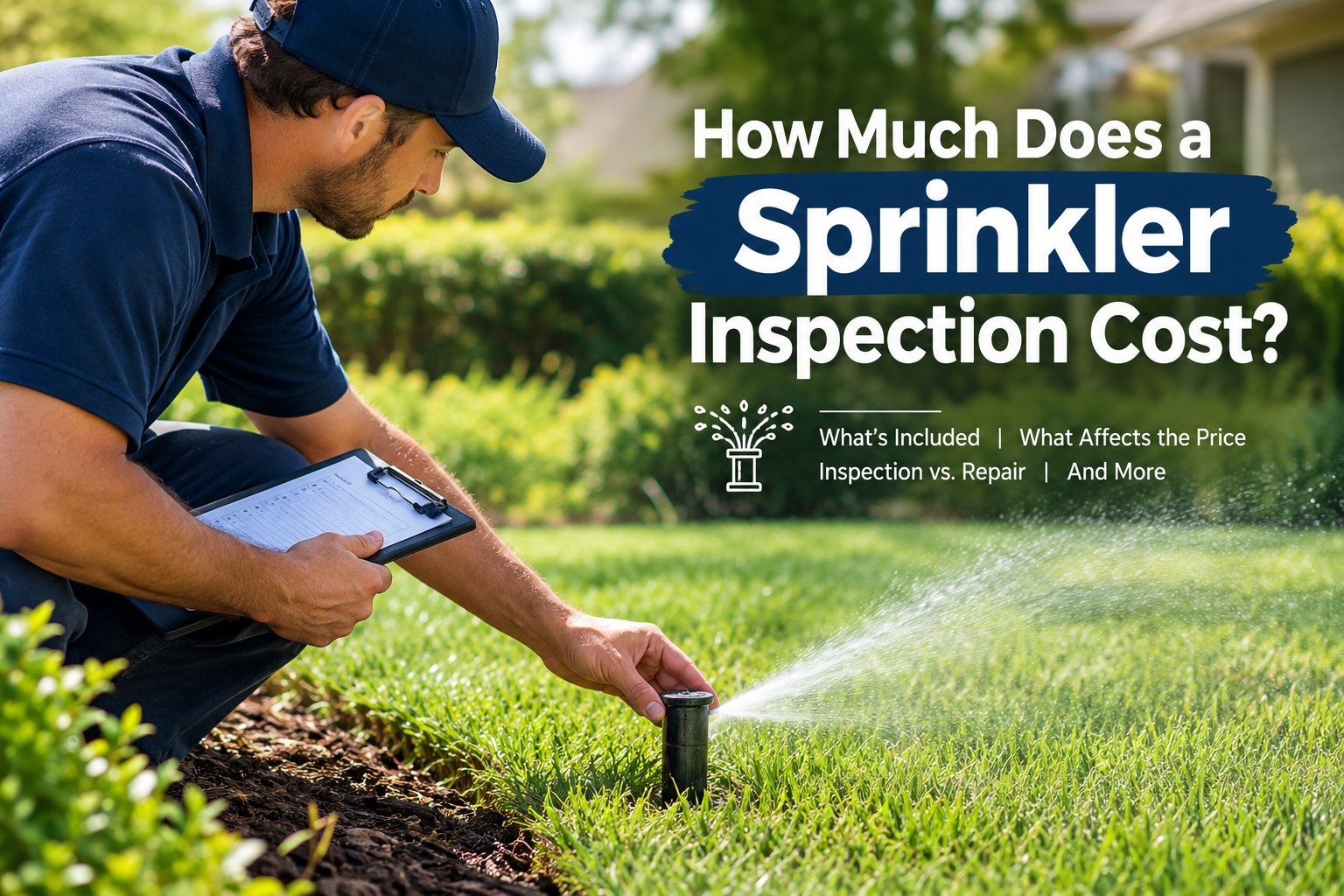
Checking heads, looking for surface leaks and comparing zones are reasonable homeowner tasks. Buried leaks, wiring faults, repeated valve failures and pump problems are different: they involve electricity, pressure or digging, and a wrong guess can cost more than a proper diagnosis. That is when professional sprinkler system repair makes sense.
How to Maintain a Lawn Sprinkler System
A few regular habits catch most problems early. The EPA’s Sprinkler Spruce-Up program frames it as inspect, connect, direct and select.
- Run each zone and watch it. Look for heads that sit low, lean, spray the wrong way or barely spray.
- Inspect heads. Check for clogged, broken or missing heads, and clear grass growing over them.
- Look for leaks. Pay attention to wet spots and places where heads connect to pipes.
- Redirect overspray. Aim heads at the lawn, not the driveway, sidewalk or house.
- Clean accessible nozzles. Rinse debris out gently, and do not force parts that are stuck.
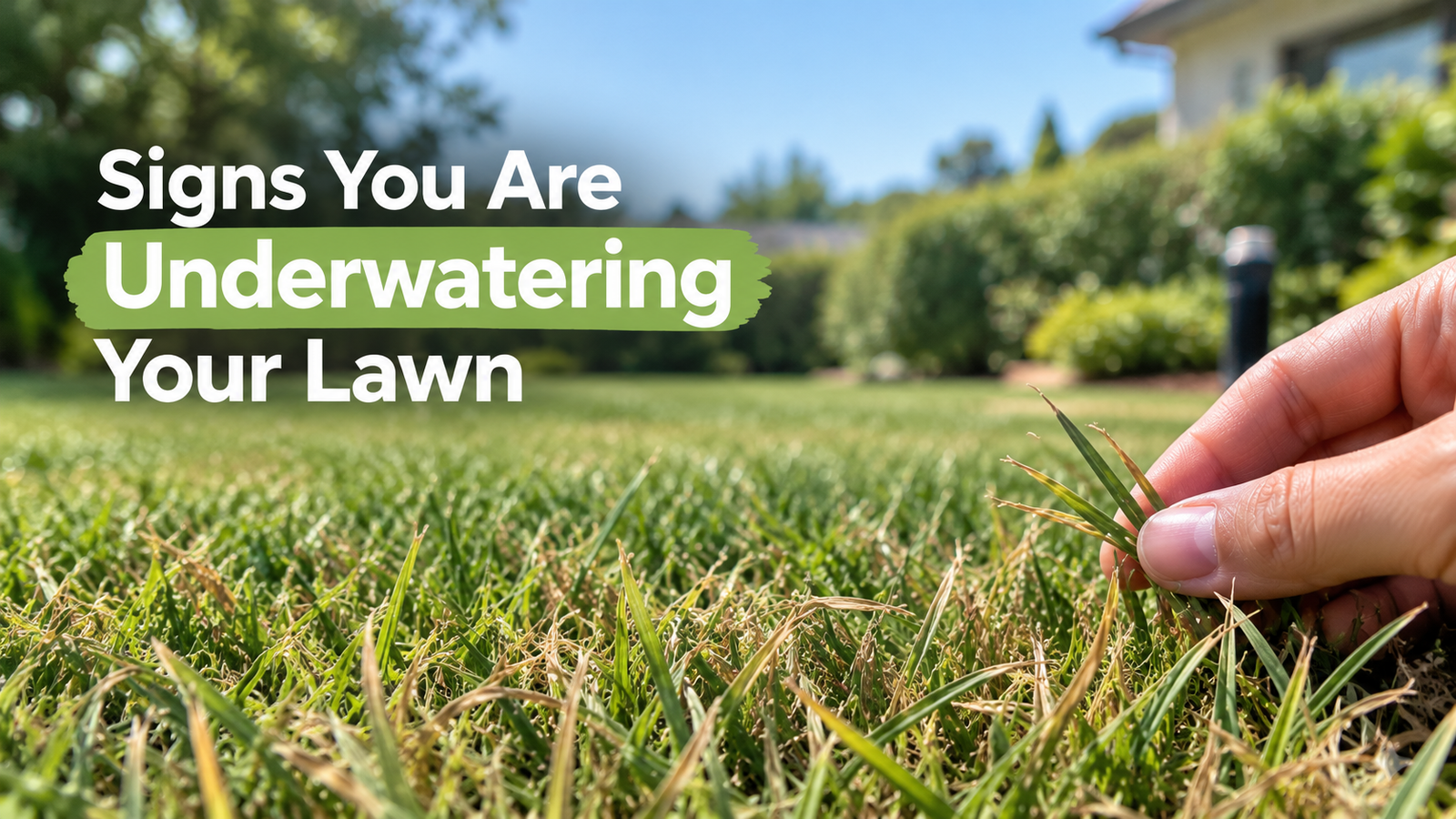
- Adjust the schedule with the seasons. A schedule left unchanged all year will overwater at some times and underwater at others.
For a full walkthrough, our beginner guide to irrigation maintenance includes a step-by-step checklist.
Frequently Asked Questions
How does an automatic sprinkler system turn on? The controller reaches a programmed start time and sends a low-voltage signal to the first zone’s valve. The valve opens, water flows, and the heads in that zone pop up.
Does a sprinkler system need water pressure to work? Yes. Pressure lifts pop-up heads and pushes water out to the edge of each spray pattern. The right amount depends on the heads installed, so check the manufacturer’s specifications rather than aiming for a universal number.
Do all sprinkler heads work at the same time? No. Heads run together only within a zone. The controller runs zones one after another, which keeps pressure usable and lets each area get its own amount of water.
How do sprinkler systems know when to stop watering? A timer stops each zone when its programmed run time ends. A rain sensor or soil moisture sensor can also interrupt or skip a cycle, if your system has one.
Can a sprinkler system work in the rain? Yes, if it is not set up to detect rain. A timer alone does not know it is raining. A rain sensor or weather-based controller is what keeps the system from watering after rainfall.
What should I do if my sprinkler system is not spraying properly? Run each zone and note whether one head, one zone or every zone is affected. Clean accessible nozzles and look for leaks first. If the problem spans several zones or involves wiring, a buried leak or the pump, call a professional.