Sprinkler heads not popping up can leave your lawn dry, unevenly watered, and vulnerable to grass damage. You turn on your irrigation system, but some sprinkler heads rise normally while others remain stuck underground. This common problem can result from low water pressure, clogged sprinkler heads, damaged components, or faulty irrigation valves.
The good news is that many sprinkler problems can be diagnosed with a few simple checks. In this guide, you’ll learn why sprinkler heads are not popping up, how to troubleshoot common causes, and when professional irrigation repair may be necessary.
How Sprinkler Heads Not Popping Up Relates to Water Pressure
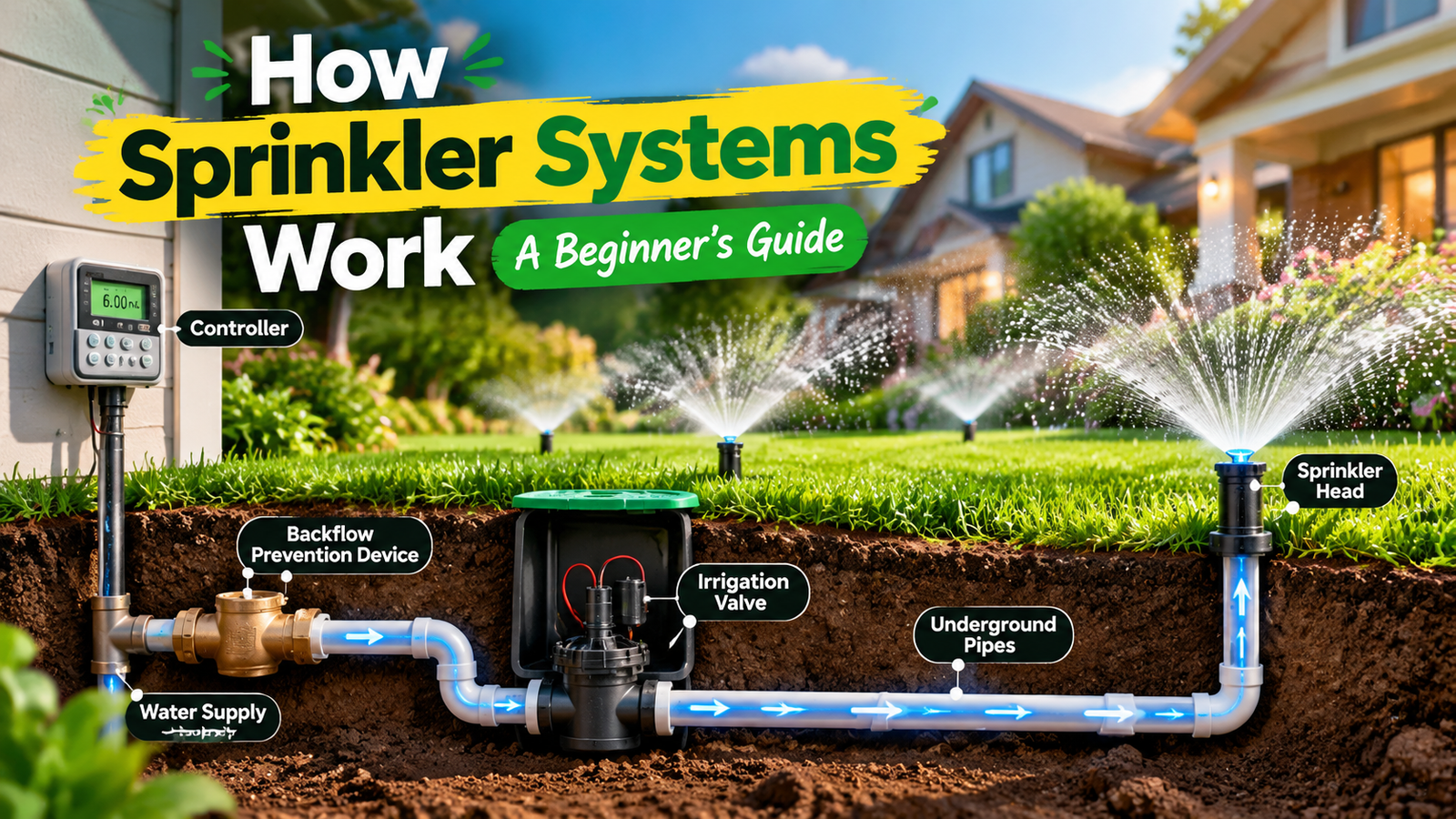
Pop-up sprinkler heads rely on water pressure to extend above the ground during a watering cycle. When the irrigation valve opens, water enters the pipe and pushes the sprinkler stem upward. After watering stops, an internal spring retracts the head into its housing.
If the water pressure is insufficient or a component becomes obstructed, the head may rise only partially or remain underground. Understanding how sprinkler systems work can help you identify which components may be responsible.
1. Low Water Pressure in Your Irrigation System
Low water pressure is one of the most common reasons sprinkler heads not popping up becomes a recurring problem. When pressure drops below the level required by your sprinkler heads, they may fail to extend fully or produce weak spray patterns.
Common causes include partially closed valves, leaking pipes, clogged filters, excessive water demand, and malfunctioning irrigation pumps.
How to Check for Low Water Pressure
- Run the affected zone and observe how far the sprinkler heads extend.
- Check whether the main water supply valve is fully open.
- Look for unusually wet soil that could indicate an underground leak.
- Compare the affected zone with other zones.
- Inspect accessible filters for debris.
If several sprinkler heads produce weak spray, investigate the water supply before replacing individual heads. Our guide to low water pressure in sprinkler systems explains common causes and troubleshooting options.
If your property uses an irrigation pump, a faulty pump may also reduce water flow. Depending on the diagnosis, professional irrigation pump replacement may be necessary.
For additional watering guidance, consult the EPA WaterSense Watering Tips, which explain practical ways to improve outdoor water efficiency.
2. Dirt, Sand, or Debris Inside the Sprinkler Head
Sprinkler heads contain small moving components that can become obstructed by dirt, sand, and other debris. These particles may enter through the water supply or accumulate around the sprinkler mechanism.
When debris interferes with movement, a head may rise halfway, stick in place, or fail to extend completely. This can be particularly common in sandy soil or irrigation systems supplied by wells.
How to Clean a Clogged Sprinkler Head
- Turn off the irrigation system before removing any components.
- Inspect the affected sprinkler head for dirt and visible obstructions.
- Remove the head or nozzle according to the manufacturer’s instructions.
- Clean accessible components with clean water and a soft brush.
- Reassemble the head and run the zone to test its operation.
Avoid forcing the sprinkler stem upward because excessive pressure can damage internal components.
If debris repeatedly returns, inspect the system’s filters and water supply. You can also read our guide to common sprinkler problems and their diagnosis for additional troubleshooting advice.
3. A Broken or Worn-Out Sprinkler Head
Sprinkler heads experience wear from regular use, lawn mower impacts, foot traffic, and exposure to outdoor conditions. Over time, internal springs may weaken, plastic housings may crack, and seals can deteriorate.
A damaged sprinkler head may leak around its base, remain partially extended, or fail to retract properly after watering.
Signs Your Sprinkler Head Needs Replacement
- The sprinkler housing has visible cracks.
- Water leaks around the stem or base.
- The head sticks even after cleaning.
- The nozzle is damaged or missing.
- The sprinkler fails to rise despite adequate water pressure.
If cleaning does not solve the problem, replacing the damaged head with a compatible model is often the most practical solution. Match the replacement to your system’s connection size, flow requirements, pressure range, and spray pattern.
For persistent problems, professional irrigation sprinkler repair can help identify damaged components and restore consistent watering.
4. Faulty Irrigation Valves or Wiring
If every sprinkler head in one zone fails to pop up, the problem may involve the zone valve or electrical controls rather than individual heads.
Automatic irrigation systems use a controller to activate solenoid valves. When the controller sends a signal, the valve opens and allows water to flow through the designated zone.
Loose wiring, damaged connections, a faulty solenoid, or a stuck valve can prevent the zone from operating correctly.
What to Check
- Confirm that the irrigation controller is programmed correctly.
- Check whether other zones activate normally.
- Inspect accessible wiring for visible damage.
- Look for leakage or blockage around the valve.
- Check whether the valve responds when the zone is activated.
Electrical troubleshooting and valve repairs may require specialized tools. If the entire zone remains inactive, follow our guide to troubleshooting a sprinkler zone that isn’t working.
Avoid handling exposed electrical connections while the system is energized. Contact an irrigation professional if you are unsure how to test the components safely.
5. Grass, Soil, or Roots Blocking the Sprinkler Head
Sometimes, sprinkler heads not popping up is caused by grass, compacted soil, mulch, or landscaping materials obstructing their movement.
As lawns grow and soil shifts, sprinkler heads can become buried below the surrounding surface. Even when water pressure is adequate, the head may struggle to extend or distribute water properly.
How to Clear an Obstructed Sprinkler Head
- Trim grass and remove loose debris surrounding the head.
- Carefully clear excess soil without damaging the sprinkler or underground pipe.
- Check whether mulch or landscaping materials block the housing.
- Make sure the sprinkler head sits at an appropriate height relative to the lawn.
- Inspect the surrounding area for roots or signs of soil movement.
If the head has sunk too deeply, it may need repositioning or adjustment. Avoid digging aggressively around the sprinkler because underground irrigation lines can be damaged easily.
Regular irrigation system maintenance helps keep sprinkler heads accessible and reduces the likelihood of recurring obstructions.
6. A Clogged Filter or Restricted Water Line
A sprinkler system may receive water from the main supply while still experiencing insufficient flow at individual heads. Clogged filters, sediment buildup, damaged pipes, and other restrictions can prevent enough water from reaching the affected zone.
If multiple sprinkler heads show weak performance, the restriction may be located upstream rather than inside an individual head.
Inspect accessible filters and clean them according to the manufacturer’s instructions. If you suspect a damaged underground pipe or hidden blockage, professional testing can help locate the problem without unnecessary digging.
For additional information, explore common irrigation problems in Florida homes.
How to Troubleshoot Sprinkler Heads Not Popping Up
Before replacing parts, determine whether the problem affects one sprinkler head, several heads, or an entire irrigation zone.
Follow these troubleshooting steps:
Step 1: Run the affected zone. Observe which heads rise normally and which remain stuck.
Step 2: Check the water pressure. If several heads spray weakly, investigate the water supply, valves, and possible leaks.
Step 3: Inspect individual heads. Remove visible grass, soil, and debris around the affected sprinkler.
Step 4: Clean clogged components. Follow the manufacturer’s instructions to inspect and clean accessible parts.
Step 5: Check the zone controls. If no heads operate, inspect the controller settings and consider a valve or wiring problem.
Step 6: Test the system again. Run the zone after completing the checks to see whether the heads extend and distribute water evenly.
These steps can help narrow down the cause without replacing parts unnecessarily. If the problem persists, professional diagnosis may prevent further damage.
For research-based lawn care and irrigation guidance, you can also consult the University of Florida IFAS Extension.
When Should You Call a Sprinkler Repair Professional?
Basic maintenance can resolve many sprinkler problems, but some issues require specialized equipment and experience.
Consider professional assistance if:
- Multiple zones have weak or inconsistent water pressure.
- Sprinkler heads repeatedly stop working after cleaning.
- You notice unexplained wet areas or unusually high water usage.
- An entire zone fails to activate.
- Underground leaks, damaged pipes, or faulty valves are suspected.
Homeowners in the local service area can explore sprinkler repair in Fort Walton Beach for help diagnosing persistent irrigation problems.
Residents in Niceville can find information about sprinkler repair in Niceville, while homeowners in Destin can explore sprinkler repair services in Destin.
For additional assistance, homeowners can visit the Summit Outdoors website to explore available irrigation services and contact information.
Addressing irrigation problems early can help protect your lawn, reduce unnecessary water waste, and prevent minor issues from becoming expensive repairs.
Simple Ways to Prevent Sprinkler Problems
Routine maintenance helps keep sprinkler heads working correctly and supports consistent lawn watering.
Follow these practical tips:
- Inspect every zone regularly: Watch for heads that fail to rise or spray unevenly.
- Keep sprinkler heads clear: Trim grass and remove debris around each head.
- Check for leaks: Look for standing water, soggy soil, and unexplained pressure changes.
- Clean clogged components: Inspect nozzles and filters when water flow decreases.
- Adjust sprinkler height: Ensure heads remain accessible above the surrounding soil.
- Monitor spray coverage: Look for dry spots, overspray, and areas receiving too much water.
- Schedule routine maintenance: Check your system regularly during periods of active irrigation.
Following a consistent maintenance routine can help prevent recurring sprinkler problems. For more lawn care guidance, read our article about the best time of day to water your lawn.
Final Thoughts
When sprinkler heads are not popping up, the problem usually involves water pressure, debris, damaged components, obstructions, or a malfunctioning valve. Start by checking whether the issue affects one head or an entire zone, then investigate the most likely causes.
Cleaning accessible components, removing surrounding grass, and inspecting the water supply can resolve many common problems. If your system continues to malfunction, professional irrigation service can help identify the underlying issue and restore reliable performance.
With regular maintenance and timely repairs, you can maintain consistent lawn coverage, reduce water waste, and keep your irrigation system working efficiently.
Frequently Asked Questions
Why is only one sprinkler head not popping up?
When other heads in the same zone work normally, the affected sprinkler may be clogged, damaged, or buried too deeply. Check for debris and obstructions before replacing the head.
Can I fix a sprinkler head that won’t pop up myself?
Yes. Many problems can be resolved by cleaning the head, removing surrounding grass, clearing debris, or replacing a damaged component. Pressure problems, underground leaks, and electrical faults may require professional assistance.
Can low water pressure prevent sprinkler heads from rising?
Yes. Insufficient water pressure can prevent pop-up heads from extending fully and may produce weak spray patterns. If multiple heads are affected, inspect the water supply and irrigation system for restrictions or leaks.
How do I know if my sprinkler valve is faulty?
If an entire zone fails to operate while other zones work normally, the valve, solenoid, wiring, or controller may be responsible. Check the controller settings first and investigate the valve if the problem continues.
How often should I inspect my sprinkler system?
Inspect your system every few months during periods of regular use. Run each zone and check for stuck heads, leaks, uneven spray patterns, and areas with poor lawn coverage.
Should I replace a sprinkler head that keeps sticking?
Replacement may be necessary if the head has a damaged housing, worn internal components, or persistent mechanical problems. Before replacing it, check for dirt, grass, and other obstructions that could be causing the issue.